Opening or growing a martial arts gym starts with one decision that shapes everything else: which discipline (or combination of disciplines) you build your business around. That choice determines who walks through your door, how you price memberships, what your facility needs to look like, and how you’ll market to fill your mats.
This guide walks through the major categories of martial arts gyms from a business owner’s perspective, the audience each one attracts, how successful schools typically structure their revenue, and the operational realities that come with each style. Whether you’re scouting your first location or thinking about adding a second program to an existing school, use this as a planning reference.
We put this together as GymRoute, martial arts gym software built specifically for schools and multi-discipline academies, so as you read through, you’ll see a few notes on how the right martial arts gym software can support the operational side of each business model.
Striking-based gyms
Muay Thai and Kickboxing gyms
Muay Thai and kickboxing gyms sit at the intersection of combat sport and fitness studio, which makes them some of the easiest martial arts businesses to fill. A large share of members join for the workout, the calorie burn, the stress relief, the structure of pad rounds, and only a portion ever moves toward sparring or competition.
For an owner, this means your top-of-funnel is much wider than a purely technical discipline. Class-based cardio kickboxing can run alongside dedicated technical classes in the same space, letting you capture casual fitness shoppers and serious strikers under one roof. Personal training and small-group pad work are strong secondary revenue lines, and because the training translates well to both self-defence and sport framing, your marketing can pull from either angle depending on your local market.
Running two tiers of the same discipline under one roof only works if your scheduling and billing can keep them straight. GymRoute lets you tag classes by type so fitness drop-ins and technical program members never get crossed wires on pricing or access.
Boxing gyms
Boxing gyms benefit from near-universal name recognition and a narrow, teachable skill set, footwork, jab, cross, hook, uppercut, that’s approachable for beginners but has real depth for advanced students. Rounds-based class structure (three minutes on, one minute off) is standard and easy to staff.
Roughly four out of five members at most boxing gyms train purely for fitness, with the rest pursuing amateur or competitive goals. That split is worth planning around: many successful boxing gyms run drop-in or class-pack pricing for the fitness crowd while reserving recurring memberships and private coaching for serious students. Personal training tends to be a disproportionately large share of revenue here, since one-on-one mitt work is a natural fit for the sport.
Juggling class-pack, drop-in, and membership pricing side by side is where spreadsheets tend to break down. GymRoute handles mixed pricing models and PT booking in one place, so you’re not reconciling three systems at the end of the month.
Traditional Karate and Kung Fu schools
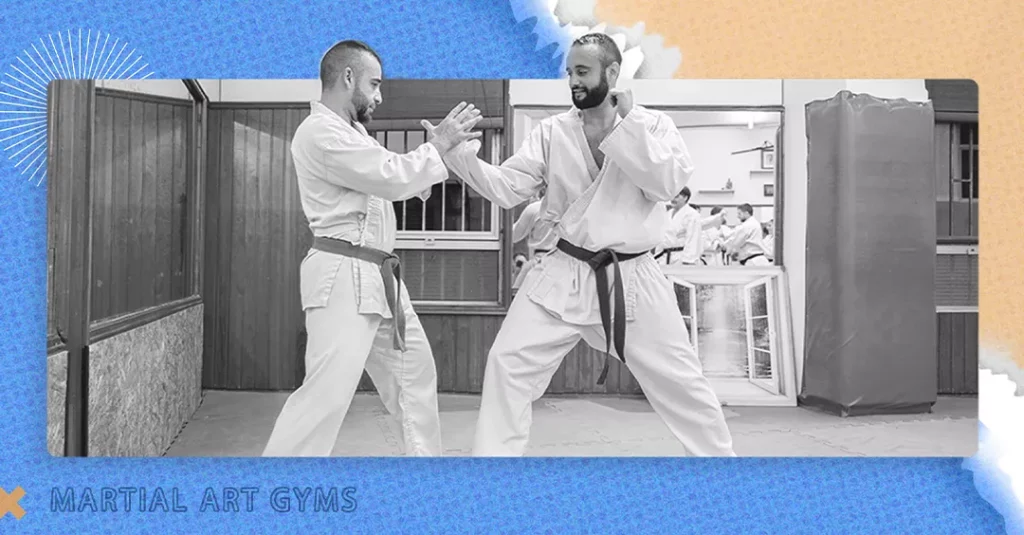
Karate remains one of the most recognizable brands in martial arts, though the market is fragmented across many lineages (Shotokan, Goju-Ryu, Kyokushin, and others), each with its own following. Most commercial karate schools lean heavily on youth enrollment, with kids often making up the majority of active students and families driving the bulk of recurring revenue through belt testing and after-school programs.
Kung Fu is harder to generalize because it covers a wide range of sub-styles, from combat-oriented Wing Chun to acrobatic Wushu to traditional forms-based systems. Positioning matters more here than almost anywhere else; a school needs to be clear about which version of “Kung Fu” it’s teaching, because each variant draws a different type of student.
Wing Chun and Jeet Kune Do studios
These two are often grouped together because of their shared lineage and their appeal to a similar type of student: adults who’ve already trained elsewhere and are looking for something more efficient or philosophically distinct. Wing Chun’s close-range, economy-of-motion approach and Jeet Kune Do’s “absorb what is useful” philosophy both attract critical thinkers rather than casual hobbyists.
Class sizes tend to run smaller because of the partner-intensive nature of the training, and private lessons often represent a meaningful share of revenue. These are rarely volume businesses; retention and word-of-mouth within a tight community matter more than broad-market advertising.
Grappling and throw-based gyms
Brazilian Jiu-Jitsu academies
BJJ is currently the fastest-growing martial art in the commercial gym space, with new school openings climbing at a double-digit annual pace in many regions, particularly in suburban markets where supply hasn’t caught up to demand. The core membership base skews toward adult professionals in their late twenties through forties, many of whom are drawn in by the discipline’s reputation as a “thinking person’s” martial art. Kids’ programs are the fastest-growing segment within BJJ specifically.
Operationally, BJJ schools tend to run several classes per day and rely on a belt system with long gaps between early ranks, often a year or more between white and blue belts. That extended timeline is a retention opportunity if the first six months are handled well, and a churn risk if they aren’t. Because demand is strong and competition among schools is intensifying in major metros, differentiation and a smooth onboarding experience for new students carry real weight.
Since the white-belt drop-off window is where most BJJ gyms lose members, automated check-ins and rank tracking in GymRoute’s martial arts gym software can flag disengaged students early, before they quietly stop showing up.
Judo clubs
Judo has a strong Olympic pedigree but a smaller commercial footprint than most striking arts, in part because many programs run through schools, universities, or recreation centers rather than standalone storefronts. Youth and college-age students dominate the membership base, and a portion of adult judoka come from wrestling backgrounds or use judo to round out an existing grappling game.
Facility requirements are more demanding than those of striking-only gyms; mats need to handle repeated throws and impact, and liability coverage deserves particular attention given the nature of the training.
Japanese Jiu-Jitsu dojos
Frequently confused with its Brazilian counterpart, traditional Japanese Jiu-Jitsu leans further into standing self-defense, weapons awareness, and classical etiquette than sport grappling. It attracts adults, including a fair number from law enforcement and security backgrounds, who want a more complete self-defense curriculum than pure ground grappling offers.
Because of the naming overlap with BJJ, clear positioning is essential. Schools that succeed here tend to lead with what differentiates them: multiple-attacker scenarios, weapons defense, and a standing component that sport BJJ doesn’t emphasize.
Wrestling programs
Wrestling is unusual among martial arts businesses because most of its infrastructure, youth clubs, high school teams and college programs exist outside the commercial gym model entirely. That creates a real gap: dedicated adult wrestling classes and MMA-focused wrestling programs remain a small, underserved niche in most markets.
For an existing MMA or BJJ academy, adding wrestling classes is one of the more efficient ways to boost attendance and cross-pollinate enrollment. Wrestlers who try grappling tend to get hooked on BJJ, and BJJ students who add wrestling become noticeably more competitive.
Sambo gyms
Sambo, a Russian grappling system blending judo, wrestling, and folk styles, remains genuinely rare outside Russia and Eastern Europe, which makes it one of the few disciplines where an owner with the right credentials could be the only game in town. Sport Sambo resembles judo with legalized leg locks and no gi; Combat Sambo adds strikes and functions as a natural bridge into MMA.
Most Sambo instruction today happens as an add-on class inside existing judo or MMA gyms rather than as a standalone business. Positioned as a complement to BJJ and MMA training, rather than a competitor to it, Sambo can be a low-cost, high-differentiation addition to an existing curriculum.
Hybrid and self-defense-focused gyms
MMA academies
MMA has become the default model for new combat sports facilities, driven largely by mainstream visibility from major promotions. Rather than teaching a single discipline, MMA gyms typically run separate striking, wrestling, and grappling classes alongside integrated MMA sessions, which means more required mat space, more equipment, and ideally instructors who specialize rather than one coach covering everything.
The tradeoff for that complexity is a wider set of entry points for new members. Someone who walks in wanting “just boxing” can be nurtured into a full MMA membership over time, and tiered pricing by access level (striking-only, grappling-only, full program) is now a standard way to capture both casual and serious students under one business.
Tiered, access-based memberships get complicated fast once you’re running multiple disciplines out of one facility; this is where dedicated martial arts gym software earns its keep. GymRoute’s membership tiers can gate class access by program automatically, so upgrading a member from striking-only to full MMA is a couple of clicks, not a manual override.
Krav Maga schools
Krav Maga has built a loyal following around its “practical, real-world” positioning, and it draws a notably higher share of female enrollment than most martial arts. Students often arrive wanting a specific set of skills rather than a lifelong martial arts journey, which tends to shorten average tenure compared to belt-progression systems like BJJ or karate.
That shorter tenure changes the revenue math: workshops, seminars, and, notably, corporate and law-enforcement training contracts can become a meaningful B2B revenue stream alongside standard memberships. Owners running Krav Maga programs typically need a steadier stream of new lead generation than owners running retention-driven disciplines.
With lead flow doing more of the work than retention, having your funnel and follow-up in one system matters. GymRoute’s marketing and lead-nurture tools can keep workshop sign-ups and corporate inquiries from falling through the cracks.
Hapkido programs
Hapkido blends joint locks, throws, and strikes borrowed from Taekwondo, Judo, and Aikido, and it rarely works well as a standalone commercial offering. It performs best bundled into an existing Taekwondo curriculum or offered as a specialized self-defense add-on, letting a school position itself as offering more “complete” training than a single-discipline competitor down the street.
Weapons, movement, and wellness-oriented gyms
Taekwondo schools
Taekwondo is a mature, well-branded market with established national and international organizations, which means differentiation matters more than category education. The typical school is majority-youth, with strong family membership patterns, parents frequently enroll multiple children, and an Olympic competitive pathway that appeals to athletically ambitious families.
Belt testing is a significant and predictable revenue line, often layered with after-school programs, camps, and birthday-party bookings. Because the student base skews young, revenue tends to follow the school calendar, so summer and holiday programming is important for smoothing out cash flow across the year.
Family accounts, camp sign-ups, and testing fees add a lot of moving parts to a youth-heavy school. GymRoute’s family billing and event registration keep parents from having to juggle separate payments for every kid and every program.
Kendo dojos
Kendo’s equipment requirements, the bogu armor and shinai, create a real barrier to casual interest, but they also produce unusually strong retention once a student invests in gear. The audience tends to include enthusiasts of Japanese culture, former fencers, and a surprising concentration of tech professionals. Many programs operate through community centers or university clubs rather than as standalone storefronts, and offering equipment rental or loaner programs can meaningfully lower the barrier to trial.
Capoeira academies
Capoeira occupies a category of its own, part martial art, part dance, part live music tradition, and it draws students who are bored by conventional martial arts formats. The roda (circle) and live music are central to the culture, and community bonds tend to run unusually deep, which shows up as strong loyalty and word-of-mouth growth. Marketing here works best when it sells the experience and community rather than just the skill set.
Aikido dojos
Aikido appeals to a smaller, more philosophically-minded audience than most combat-focused arts, with a membership skewing noticeably older than the martial arts average. Many students arrive with prior martial arts experience and are drawn to the emphasis on blending with an attacker’s energy rather than confronting it directly.
Growth ceilings tend to be lower than in BJJ or MMA, but retention among committed students can be excellent; some stay for decades. It’s often best positioned as a complement to combat-focused programs rather than a competitor for the same students.
Tai Chi studios
Tai Chi taps a large, underserved market, older adults, people managing stress, and those recovering from injury, that most combat-oriented schools never reach. It’s frequently taught in parks, community centers, or yoga studios rather than traditional martial arts facilities, and the equipment and space requirements are minimal.
The older demographic tends to produce stable, reliably paying members, but the marketing channels look nothing like combat sports marketing. Partnerships with senior centers, retirement communities, and healthcare providers tend to outperform typical gym marketing tactics for this audience.
Choosing your gym’s focus
A few patterns are worth keeping in mind when deciding what to build:
- Fastest-growing categories right now include Brazilian Jiu-Jitsu, MMA/multi-discipline academies, and the fitness-crossover end of Muay Thai and boxing, all of which benefit from demand currently outpacing the supply of quality schools in many markets.
- Best fit for youth-driven revenue tends to be Taekwondo and Karate, both of which have mature systems for belt testing, camps, and after-school programs built around families.
- Best fit for adult hobbyist retention tends to be BJJ, Muay Thai, and Tai Chi, disciplines where the audience is looking for a long-term practice rather than a quick skill set.
- Underserved niches worth watching include adult and MMA-integrated wrestling programs and Sambo, both of which have thin competition in most Western markets relative to demand from the broader grappling and MMA community.
Many of the most resilient gyms don’t commit to a single style at all; they layer a primary discipline with one or two complementary programs (wrestling inside a BJJ academy, Hapkido inside a Taekwondo school, cardio kickboxing alongside technical Muay Thai) to widen their enrollment funnel without diluting their identity.
Running the business behind the mats
Whatever mix of disciplines you choose, the back-office side of the business looks similar: managing memberships and trials, tracking belt or rank progression, automating billing, scheduling classes across multiple programs, and keeping communication with members organized as your school grows.
GymRoute is martial arts gym software built to handle that operational layer for schools and multi-discipline academies, so owners can spend their time on curriculum and coaching instead of chasing payments and spreadsheets. If you’re scoping out a new school or trying to clean up the systems behind an existing one, it’s worth seeing how the right martial arts gym software can support whichever style, or combination of styles, you decide to build your gym around.