For a gym or studio owner, the cheapest way to equip a facility is commercial-grade used equipment, which typically costs 40% to 70% less than new while being built for the all-day traffic your business demands. The best sources are gym liquidation sales and closure auctions for bulk buys, refurbished commercial outlets for warrantied machines, and equipment brokers for full-facility packages. Leasing and financing spread the cost instead of cutting it. Whatever the source, prioritize commercial-grade durability, serviceability, and warranty over the lowest sticker price, because in a facility, downtime and repairs cost more than the discount saved.
The owner’s math: cheap is about total cost, not sticker price
For a home buyer, “cheap” means the lowest price. For a gym owner, it means the lowest total cost of ownership, and those are not the same thing. A machine that costs less upfront but breaks under heavy use, cannot be serviced, or sits idle waiting for parts is expensive, because in a facility every piece of downtime costs you member satisfaction and potentially memberships.
So this guide is about finding equipment that is genuinely cheap for a business: low purchase price, but commercial-grade durability, available parts, and ideally a warranty. That combination is what protects both your budget and your members’ experience.
The single biggest lever is buying used commercial equipment rather than new. Fitness equipment is engineered for sustained, heavy use, and commercial-grade machines are built to handle thousands of hours. Because that gear depreciates steeply, commercial equipment from established brands holds only about 25% to 45% of its original value after several years, you can acquire machines built for exactly your traffic level at 40% to 70% below retail. The depreciation that hurts the gym that sold it is the opportunity that equips yours.
The best places to source cheap gym equipment
These sources are ranked for a facility owner’s priorities: commercial durability, bulk availability, and total cost, not just the lowest per-item price.
1. Gym liquidation and closure sales (best for bulk commercial bargains)
When a gym closes, upgrades, or ends an equipment lease, its entire inventory goes at once: treadmills, racks, cable machines, dumbbells, benches, sometimes flooring and mirrors, often at a fraction of retail. For an owner outfitting or re-equipping a facility, this is frequently the single best source, because you can acquire a large share of a full setup in one transaction, all of it commercial-grade.
The equipment comes from chains, independent gyms, and boutique studios, and much of it is well-maintained, especially from boutiques where machines saw lighter traffic. Some sales are public; others run through liquidators or brokers who consolidate equipment from multiple closures. The main requirement is readiness: you need to move quickly and arrange transport for heavy items.
2. Refurbished commercial outlets (best balance of price and reliability)
Refurbished outlets buy machines from gym closures, lease returns, hotel refreshes, and corporate facilities, then test, repair, and resell them with a warranty. For a facility owner, this is often the smartest option, because it delivers commercial-grade equipment that has been professionally inspected and is backed by a return policy, removing the risk that sinks a private used purchase.
You pay more than at an auction or on a marketplace, but you buy certainty: working equipment, a warranty, and usually delivery and installation support. For the cardio and electronic machines that are expensive to repair, that premium is almost always worth it. Prioritize outlets with a real showroom you can visit, US-based warehousing, a warranty of at least 90 days, and a person you can talk to about specific machines.
3. Equipment auctions (best per-unit prices for prepared buyers)
Gym closure auctions, listed on auction aggregators, deliver the lowest per-item prices available, but they demand the most from the buyer. Preview windows are short, often only a few hours to inspect dozens of machines, pickup deadlines are tight, and you need cash and your own logistics ready. If you cannot move twenty-plus machines within a few days, storage fees erode the savings.
Auctions reward owners who know equipment well, can inspect fast, and have the cash and trucks to execute. For an experienced operator equipping a facility on a tight budget, they are unmatched on price. For a first-time buyer, the inspection and logistics pressure make a refurbished outlet the safer call.
4. Equipment brokers (best for full-facility packages)
Brokers specialize in sourcing and assembling complete equipment packages, often from multiple closures, and can outfit an entire facility to spec. For an owner who wants commercial-grade equipment without personally chasing individual liquidations and auctions, a broker does the sourcing legwork and can deliver a coordinated package, sometimes with design and installation help.
You pay for that service, so it is not the rock-bottom option, but it saves enormous time and can still land well below new-retail pricing for a full fit-out. It suits owners whose time is better spent running the business than hunting machines.
5. Direct from closing gyms (best for negotiated local deals)
Sometimes the best deal is direct. A gym closing in your area may sell its equipment privately to avoid auction or liquidator fees, and a direct, negotiated package deal can save thousands while avoiding the lead times of new equipment. Watch for local closure announcements, stay connected in your local fitness community, and be ready to make a fast, fair offer for a bulk purchase.
The trade-off is that you handle inspection, logistics, and any repairs yourself, so this suits owners confident in assessing commercial equipment. When it works, buying the floor of a comparable local gym is one of the cheapest ways to equip yours.
6. Manufacturer-refurbished and lease-return programs (best for near-new with support)
Some commercial manufacturers and dealers sell their own certified-refurbished or lease-return equipment, machines that came off a lease, were reconditioned by the maker, and are resold at a discount with manufacturer backing. This is the closest you get to new-with-warranty at a used price, and it comes with the serviceability and parts availability of buying through the brand.
It costs more than a marketplace or auction find, but for the flagship cardio and strength pieces your members use most, manufacturer support and guaranteed parts can justify the premium over the life of the machine.
7. Online marketplaces (best for filling specific gaps)
Facebook Marketplace and Craigslist are less about outfitting a whole facility and more about filling specific gaps: a single replacement machine, a few extra benches, a piece a liquidation did not include. Search with brand-specific terms plus your city to find commercial units locally, and use them opportunistically alongside the bulk sources above.
Treat these as no-warranty, buyer-beware channels: quality varies, there is no recourse, and inspection is mandatory. For a one-off commercial piece from a local seller who knows what they have, they can be excellent; for equipping a facility, they are a supplement, not the foundation.
Buy, lease, or finance? The cost decision
Sourcing cheap equipment is only half the cost question. How you pay for it matters as much for a business, so weigh the three approaches.
Buying outright is cheapest over the life of the equipment and gives you an owned asset, but it demands the most cash upfront, which is the scarcest resource when opening or expanding. Used and refurbished buying makes outright purchase far more achievable.
Leasing spreads the cost into predictable monthly payments and keeps cash free for other launch or growth needs, and lease-return equipment later re-enters the used market (which is where some of your bargains come from). It costs more overall, and you may not own the equipment at the end, but it protects cash flow.
Financing splits the difference: you own the equipment but pay over time with interest. It is worth it when preserving cash matters more than minimizing total cost, which is common in the capital-intensive early stage of a gym.
The cheapest headline is buying used outright; the cheapest sustainable choice depends on your cash position. Many owners combine approaches, buying used free weights and racks outright while leasing or financing expensive cardio.
How to inspect used equipment before you buy
Whatever the source, inspection is what separates a bargain from a liability. In a facility, a machine that fails under heavy use is far costlier than the discount you saved, so inspect rigorously when there is no warranty. Here is what to check.
Check the frame first
The frame is the foundation of every machine, and frame damage is usually a dealbreaker; repairs are often impossible or not worth the cost. Look for hairline cracks, rust, and weak or broken welds. Light surface scratches are cosmetic and fine; structural compromise is not. On equipment destined for all-day commercial use, frame integrity is non-negotiable.
Run the “listen and feel” test on anything motorized
Run cardio machines for at least five minutes. Listen for a high-pitched whine (worn bearings) or a low growl (a failing motor), both signs of internal wear heading toward failure. Check treadmill belts for fraying or a shiny, glazed surface, which means overheating and slipping. In a facility, these machines will run constantly, so a marginal motor or belt now becomes a breakdown soon.
Pull the hours and mileage
Usage matters more than age, and it matters even more for equipment about to enter heavy commercial service. A machine from a low-traffic hotel is very different from one out of a 24/7 gym. Many commercial machines have a hidden service menu showing total hours or mileage; learn the button combination for that model and check it. High frame mileage means internal components are near the end of life, however clean it looks.
Test every function
Turn everything on and run it fully: speed, incline, resistance, and every display readout on cardio; every weight increment and full range of motion on strength; cable and pulley smoothness on functional trainers. Console and electronic faults are common and expensive to fix, especially on older touchscreens and proprietary systems, so confirm every function before you pay.
Insist on serviceable commercial brands
Equipment from established commercial manufacturers is easier to service and source parts for, which is critical in a facility where a down machine needs a fast fix. A well-known commercial brand with available parts is a safer buy than an obscure or discontinued model, even at a higher price, because equipment you cannot get parts for is equipment you cannot keep running for members.
The rule that protects your budget twice: if you or your team cannot confidently inspect a used machine, buy from a refurbished outlet with a warranty. The few thousand dollars saved on an uninspected auction lot vanishes the first time a core cardio machine fails mid-week with no coverage and no member access.
Match the source to what you are equipping
Different equipment is cheapest from different channels, and the right mix depends on your facility.
For a full fit-out or major re-equip, a gym liquidation, a broker package, or a refurbished outlet that supplies complete setups will beat assembling everything piece by piece. For flagship cardio (the treadmills and machines members use most), lean toward refurbished-with-warranty or manufacturer-refurbished, because downtime and repair costs are highest here. For strength and free weights (racks, plate-loaded machines, dumbbells, plates), buy used aggressively from liquidations, auctions, and marketplaces, since these are durable, rarely wear out, and are cheapest secondhand. For filling specific gaps, use local marketplaces opportunistically.
Buying commercial-grade used across the board, rather than consumer equipment that will not survive facility traffic, is the through-line. Cheap consumer gear is a false economy in a business that runs it all day.
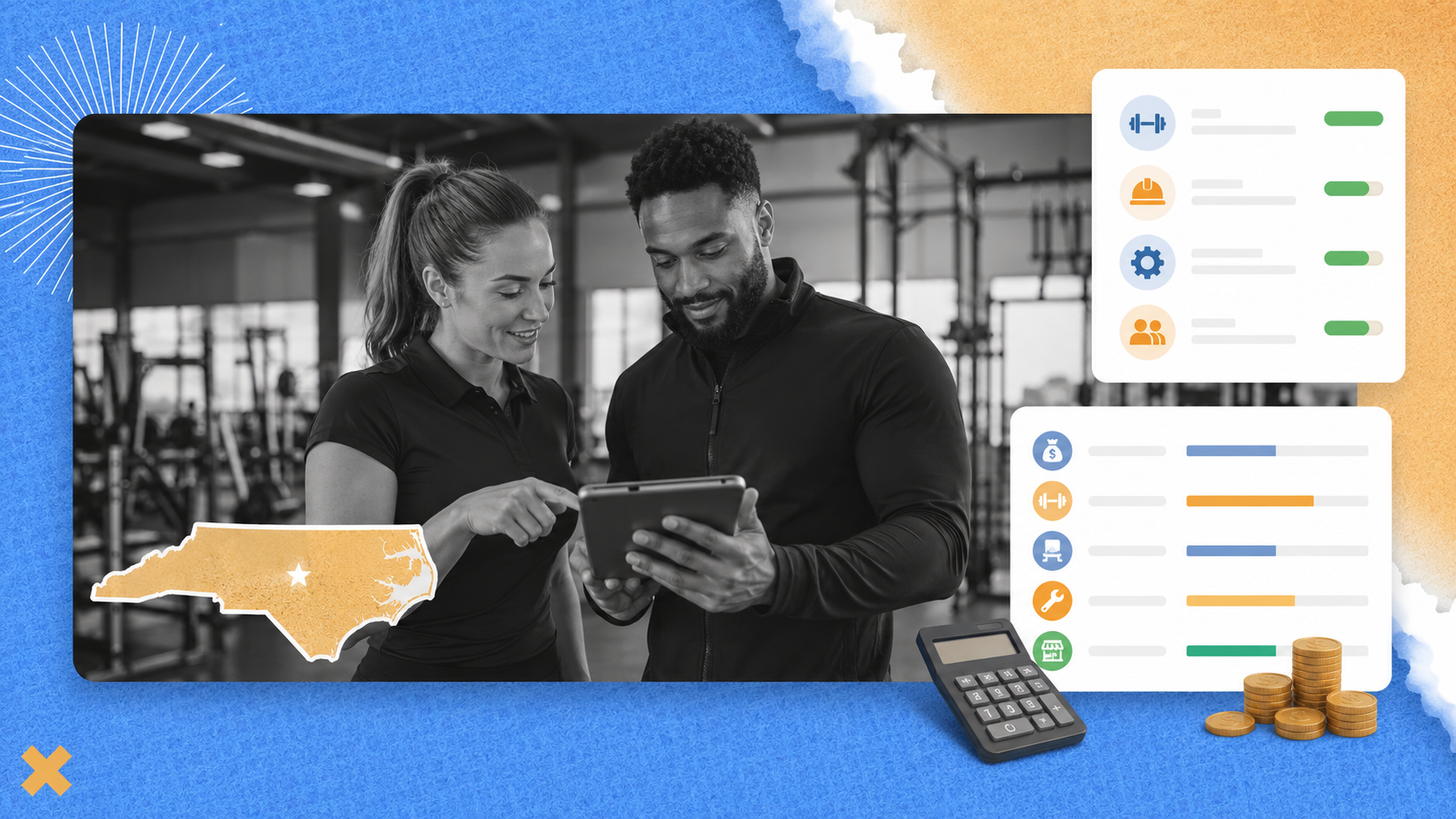
Equipment is one cost center. The bigger one is what you do after.
Sourcing equipment cheaply is a real and worthwhile saving, but for most gyms it is a one-time cost. The costs that determine whether the business actually works are ongoing: member acquisition, retention, billing, and the daily operations that decide whether members stay long enough to justify what you spent on the floor.
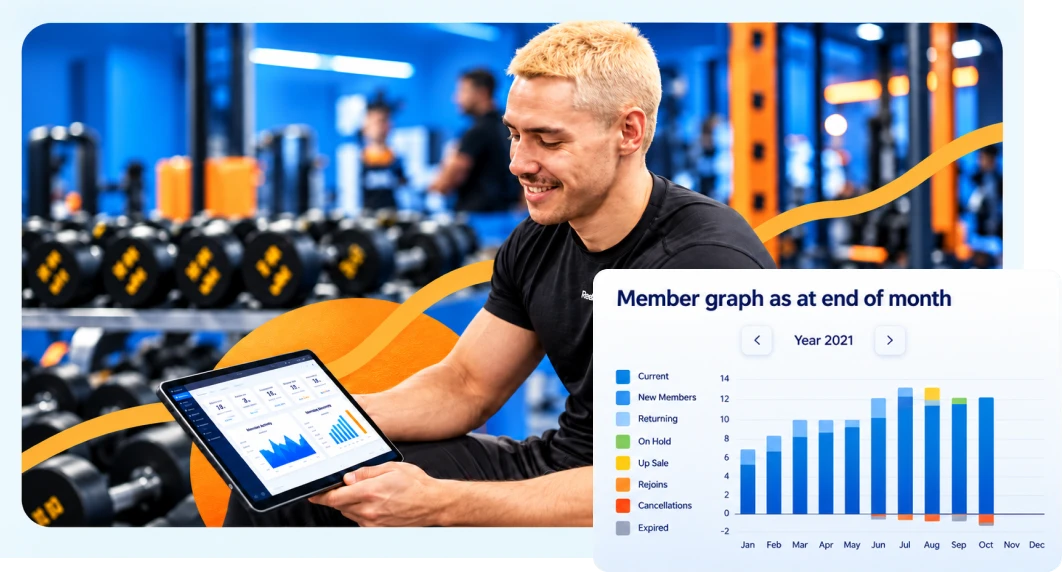
That is worth keeping in proportion. Saving 50% on a treadmill is good; keeping the members who use it is what pays for the whole facility. The same discipline you bring to sourcing, buying for total cost rather than sticker price, applies to operations, where connected gym management software handles membership billing, retention tracking, and daily management in one place, recovering revenue that quietly leaks away in a way no equipment discount can match. Equip the floor cheaply, then make sure the business running on it keeps the members you worked to win.
A well-sourced floor with a leaky operation still loses money. You can see how GymRoute tracks the retention and revenue that decide whether your equipment investment pays off.
Frequently asked questions
Where can gym owners buy cheap commercial equipment?
The cheapest commercial equipment for a facility comes from gym liquidation sales and closure auctions (best for bulk, commercial-grade bargains), refurbished commercial outlets (best balance of price and warranty), and equipment brokers (best for full-facility packages). Buying direct from a closing local gym can also yield negotiated bulk savings. These sources typically cut 40% to 70% off new retail while supplying gear built for all-day facility traffic.
Is used commercial gym equipment worth it for a facility?
Yes, for most equipment. Commercial-grade machines are built to handle thousands of hours, so quality used gear easily withstands facility traffic while costing 40% to 70% less than new. The key is buying commercial-grade (not consumer) equipment, inspecting it properly, and favoring serviceable brands with available parts. For expensive cardio, refurbished-with-warranty reduces risk; for durable strength equipment, used from liquidations and auctions offers the deepest savings.
How much can a gym save buying used equipment?
Typically 40% to 70% versus new retail, with the deepest savings at auctions and liquidations and smaller savings at refurbished outlets, where you pay for inspection and warranty. Because commercial equipment holds only about 25% to 45% of its value after several years, a facility can acquire machines built for its traffic level at a large discount. The savings are largest on expensive cardio and strength machines.
Should a gym buy, lease, or finance equipment?
Buying used outright is cheapest over the equipment’s life and gives you an owned asset, but requires the most upfront cash. Leasing spreads cost into predictable payments and preserves cash for other needs, at a higher total cost. Financing lets you own while paying over time with interest. Many owners combine them, buying durable strength gear outright while leasing or financing expensive cardio, choosing based on their cash position rather than sticker price alone.
Where do closing gyms sell their equipment?
Closing gyms sell through liquidators and brokers who buy in bulk, closure auctions listed on auction aggregators, refurbished-outlet trade-ins, and direct private sales to other owners. This is exactly why liquidations and refurbished outlets are such strong sources: when gyms close or upgrade, well-maintained commercial equipment floods the used market. An owner watching for local closures can often negotiate a direct bulk deal at excellent prices.
What should I inspect before buying used gym equipment for my facility?
Check the frame first for cracks, rust, or bad welds, since frame damage is usually a dealbreaker. Run motorized machines for at least five minutes, listening for worn bearings or a failing motor and checking belts for fraying or glazing. Pull the machine’s hours or mileage from its service menu, test every function and readout, and insist on serviceable commercial brands with available parts. For high-traffic facility use, buy refurbished-with-warranty when you cannot inspect confidently.
Is refurbished commercial gym equipment reliable enough for a busy facility?
Yes, when bought from a reputable outlet that tests, repairs, and warranties each machine. For a busy facility, refurbished commercial equipment is often the smartest choice, because it combines commercial durability with an inspection and warranty that protect against the downtime a private used purchase risks. Prioritize outlets with a real showroom, US-based warehousing, a warranty of at least 90 days, and delivery and installation support.
The bottom line
For a gym or studio owner, cheap equipment means low total cost, not just a low price, so the goal is commercial-grade gear at a used-market discount, sourced in a way that protects against downtime. Gym liquidations and auctions win on bulk price, refurbished outlets win on reliability and warranty, brokers win on full-facility convenience, and buying direct from a closing gym can beat them all when the timing is right.
Buy used and commercial-grade across the board, favor serviceability and warranty on the machines your members depend on most, and choose buying, leasing, or financing based on your cash position. Then keep the real prize in view: the floor is a one-time cost, but the members training on it are recurring revenue, and keeping them is what ultimately pays for everything you sourced.