There’s more to establishing a gym than just renting a space and buying fitness equipment. A business model, realistic financial projections, a marketing strategy and an understanding of your target customers are essential.
A solid Gym Business Plan template will assist you in structuring these decisions before you invest money. It also gives the lenders and investors an idea of your business idea, startup expenses, potential earnings, and growth plan.
If you’re starting a standard gym, a boutique fitness center or your own personal training company, this guide details how to create a gym business plan, offers a free copy-ready template and shows an example of a financial plan if you’re starting a 5,000-square-foot gym in the U.S.
What Should a Gym Business Plan Include?
A gym business plan explains the concept of your gym business, your target market, the services you provide, your prices, your marketing strategy, the day-to-day operations and your financial objectives.

A complete plan has these sections:
- Executive summary and business description
- Mission statement and business goals
- Target market and market analysis
- Competitive analysis and SWOT analysis
- Services provided and membership fees
- Marketing strategy
- Operations and staffing plan
- Initial and running costs
- Revenue forecasts and break-even analysis
- Cash flow and profit and loss (P&L) statements
- A funding request, if you are seeking funding
The SBA’s guide to writing a business plan lists the sections of a traditional plan: executive summary, company description, market analysis, organization and management, service or product line, marketing and sales, funding request, and financial projections.
| Section | What to Include |
|---|---|
| Executive summary | Business concept, goals, and financial overview |
| Market analysis | Local market, demographics, and competitor analysis |
| Classes and fees | Memberships, PT and group classes |
| Marketing plan overview | Advertising, pre-sales, and referrals |
| Operations plan | Staffing, equipment, and technology |
| Financial projection | Costs, revenue, and break-even point |
| Funding request | Required investment and intended use |
A SWOT analysis before finalizing your strategy will help you determine your strengths and weaknesses, opportunities and threats.
Download the Free Gym Business Plan Template
A gym business plan template offers a pre-designed plan that you can customize rather than create a document from scratch.
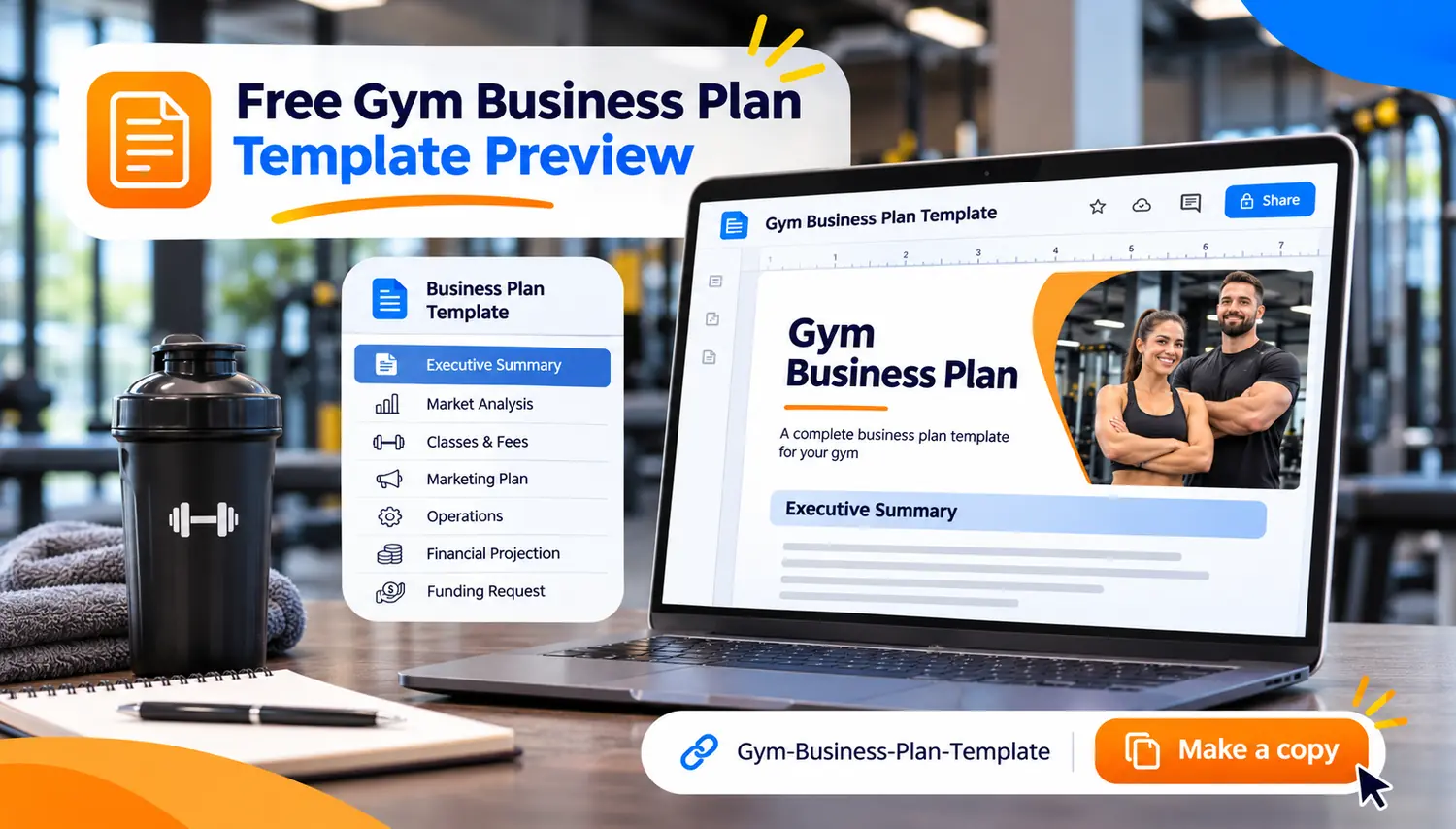
Download the free gym business plan template (Word). The file opens in Microsoft Word, Google Docs and Pages. Fill in each section with information about your business.
Free Gym Business Plan Template
| Section | Your entry |
|---|---|
| Business name | [Enter gym name] |
| Business location | [Enter address] |
| Entrepreneurs | [Enter names] |
| Small business entity form | [LLC, corporation, or partnership] |
| Type of gym | [Traditional, Boutique, PT Studio] |
| Mission statement | [Describe your purpose] |
| Target market | [Describe ideal members] |
| Services offered | [Memberships, classes, PT] |
| Competitors | [List nearby gyms] |
| Membership pricing | [Enter membership tiers] |
| Marketing strategy | [Identify promotions activities] |
| Staffing plan | [List the employees and roles] |
| Startup costs | [Enter initial investment] |
| Monthly expenses | [Enter operating costs] |
| Revenue projections | [Estimate monthly revenue] |
| Break-even target | [Calculate required sales] |
| Funding request | [Enter required capital] |
How to use this template:
- Open the file in Word or Google Docs and save your own copy
- Fill out the blanks with your information about your business
- Include competitor research and financial estimates
- Add quotes from suppliers and calculations of start-up costs
- Have an accountant or business advisor look over the final plan
You can even save your completed plan and share it with investors or lenders as a PDF.
How to Make a Gym Business Plan Executive Summary?
Your gym will be introduced and explained in your executive summary, which will include your business concept, market segments, and financial goals.
It might seem obvious, but it is a step that is often neglected: write it last, after all your market research and financial projections have been completed, then put it first in the plan.
Include:
- Name and address of the business.
- Type of fitness facility.
- Target members.
- Primary services and sources of income.
- Competitive advantage.
- Startup funding requirements.
- First-year business objectives.
Example Executive Summary
Business Description: FitCore Fitness Center
Business model: Strength training, cardio equipment, group classes, personal training in a 5,000-square-foot fitness center
Target market: Working professionals, adults (22-50), beginners and local fitness enthusiasts.
Mission: To offer accessible, affordable fitness programs that help community members build long-term exercise habits.
Revenue model: Monthly memberships, personal training, and group fitness classes.
Business goal: Achieve monthly operating break-even within the first year with the base case forecast.
The fictional example can be customized to your business.
What Should Market Analysis and Target Members Include?
The purpose of market analysis is to find out if there is a sufficient number of potential customers to support your gym. Before picking a location, study the population, income, competition, fitness preferences, and accessibility of the area.
You should first look at businesses in a 3-5-mile radius around your proposed facility.
The following are useful research sources:
- Data from the U.S. Census Bureau’s population estimates
- Census Business Builder
- Reports for local commercial properties
- Competitor websites and competitor pricing pages
- Surveys and interviews of customers
Competitor Research Checklist
| Factor | What to look for |
|---|---|
| Demographics | Age groups and income levels |
| Competitors | Number of fitness facilities within 3-5 miles of your location |
| Pricing | Monthly membership fees |
| Services | Personal training and group classes |
| Accessibility | Parking and public transport |
| Market gaps | Underserved customer needs |
For instance, if there are other gyms nearby that offer general fitness classes, you may distinguish your gym by offering beginner classes, strength training, or classes for smaller groups.
What Should Services, Memberships and Pricing Include?
In the example plan below, memberships run from $39 to $79 a month and personal training starts at $200. Set your own prices after checking local competitors. The purpose of your gym business plan is to offer an explanation of the services that you will be selling, and of the way each one will help you make money.
Common revenue streams in the gym include monthly memberships, gym personal training, fitness classes, fitness evaluations and niche coaching.
Example Membership Pricing
| Membership | Example monthly price | Included services |
|---|---|---|
| Basic | $39 | Standard use of gym |
| Standard | $59 | Gym access and selected classes |
| Premium | $79 | Gym access, classes, and additional benefits |
| Personal training | $200+ | Separate coaching package |
These are just examples of prices, not the average prices from the US market. When determining your rates, research your local competition first. For a fuller look at setting prices, read our guide to gym pricing and profitability.
Use the membership average revenue per member (ARPM):
ARPM = Total membership revenue ÷ Active members
In the case of monthly membership fees, for instance, $30,000 per month from 500 members is $60 per member.
How Do You Create a Gym Marketing Plan?
A gym marketing plan is a statement that details the way you will get visitors to your gym, turn those visitors into paying members and keep your members coming back.
Break down your marketing efforts into 3 phases.
1. Pre-launch marketing
- Create social media and website
- Collect membership enquiries
- Offer founding-member discounts
- Collaborate with local enterprises
- Run local advertising which is targeted
2. Launch marketing
- Plan a kickoff
- Provide basic fitness evaluations
- Promote referral incentives
- Provide facility tours and introduce trainers
3. Ongoing marketing
- Publish fitness-related content
- Notify members about membership renewal
- Run referral campaigns
- Share stories with success of members where appropriate
- Encourage classes by email and social media
Monitor customer acquisition cost (CAC):
CAC = Total marketing and sales costs ÷ New members acquired
An example to illustrate this is that for 40 members acquired for $2,000, the CAC is $50.
Include marketing expenses in your financial projections rather than assuming customers will arrive without investment.
What Should a Gym Operations Plan, Staffing Plan and Tech Stack Include?
The operations plan describes how your gym will operate each day, and the staffing plan is used to determine who will be in charge of your gym and who will handle member needs. Our guide on how to hire gym staff covers job descriptions, interviews and onboarding for each role.
The following roles may be needed for a 5,000 sq. ft. gym:
| Position | Responsibilities |
|---|---|
| Gym manager | Daily operations and staff supervision |
| Front-desk employee | Member sign-in and inquiries |
| Personal trainer | Coaching and assessments |
| Group instructor | Fitness classes |
| Cleaning workers | Cleanliness in the facilities |
Plan to keep the equipment in good repair and working order. If you are on a tight budget, you might be able to outsource or merge some of the roles.
Choose the right gym management software
You should be able to use the following technologies in your technology stack:
- Membership management
- Automated billing and payments
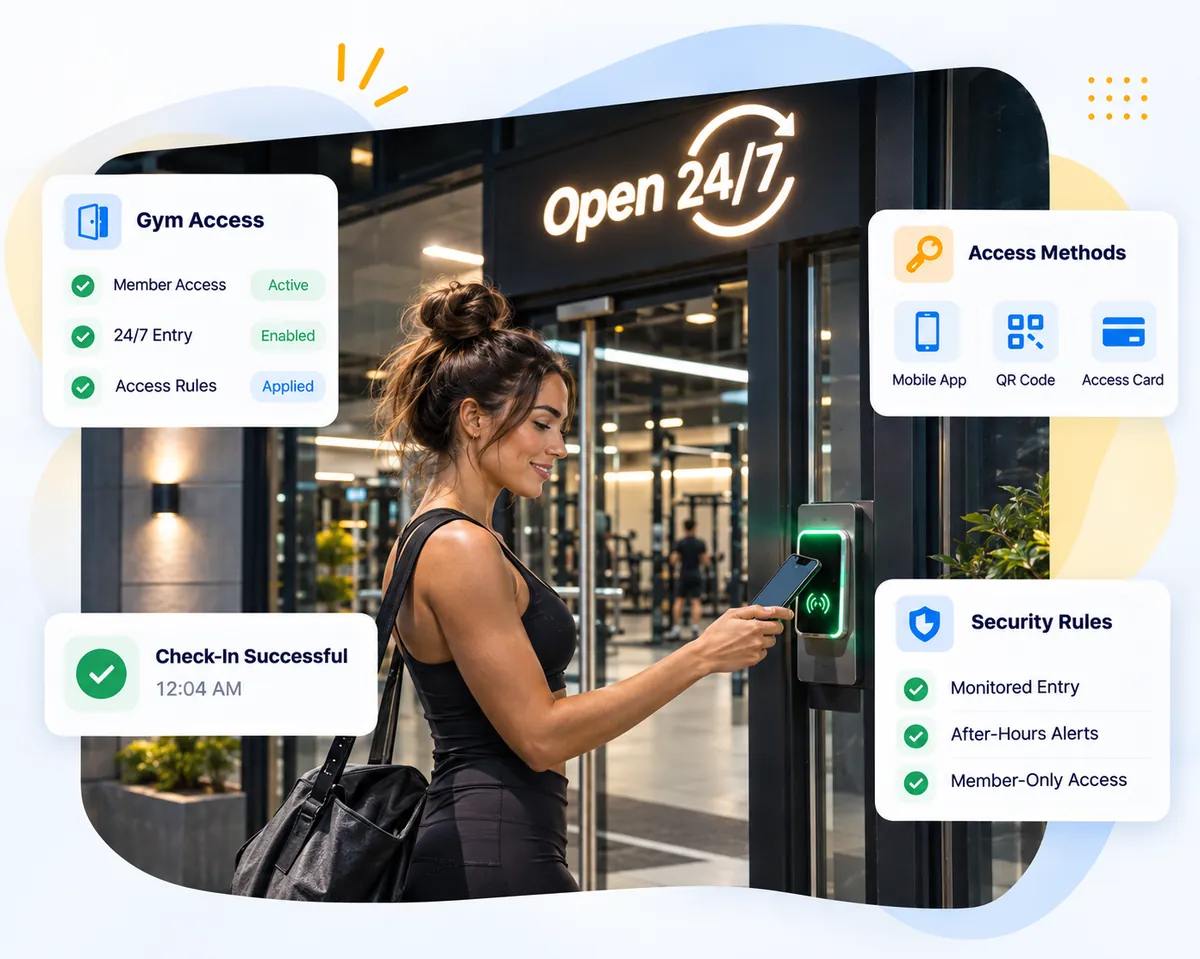
- Access control and key fobs for gym
- Arranging classes and booking classes
- Customer relationship management (CRM)
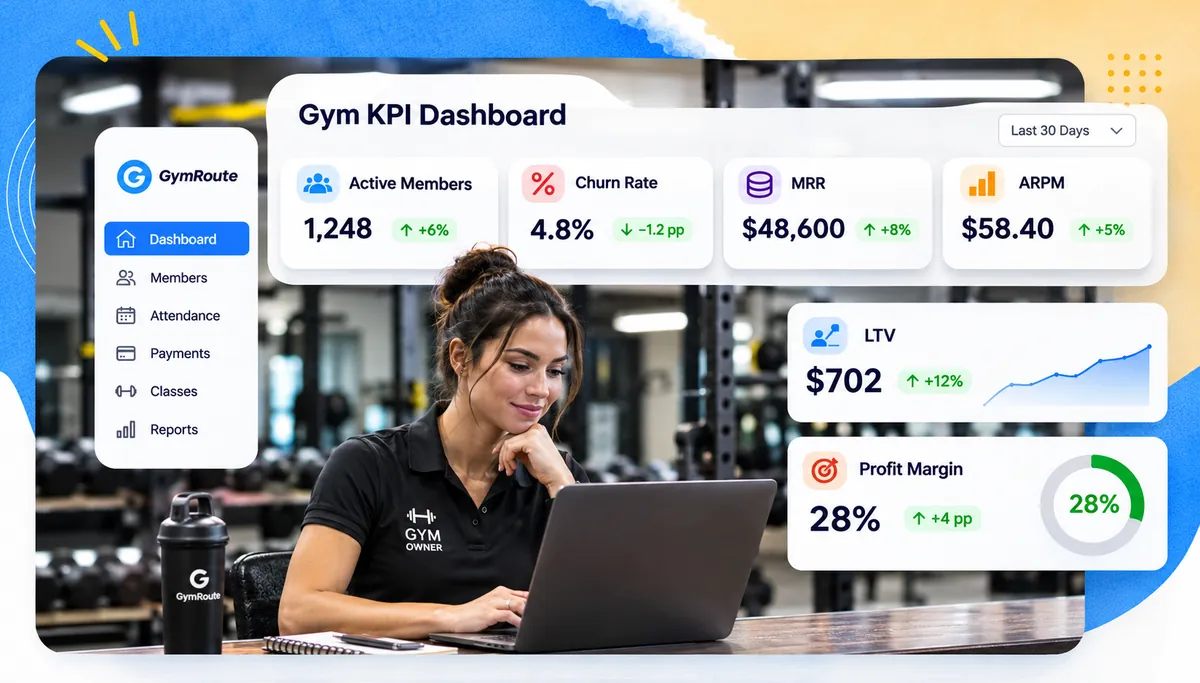
- Financial and membership reports
Linking membership records to access control can help reduce manual administration. In other words, if a membership expires or a payment is missing, then the membership workflow should reflect the updated membership status (as per the supported integrations of the system).
Pick software that covers billing, membership records and door access together, so you do not run three separate systems as membership grows. Budget for it in your startup costs.
How Do You Do Financial Projections and Break-Even Analysis for a Gym?
Financial projections help you determine if your gym is likely to be profitable and sustain its income in the future. Start-up costs, monthly operating expenses, revenue projections, cash flow, P&L statements and break-even analysis should be included in your financial plan.
Example Startup Costs for a 5,000-Square-Foot Gym
The figures below are only planning estimates; they are not supplier quotes or national averages. For real cost ranges, see our guide to the cost to start a small gym.
| Startup expense | Estimated cost |
|---|---|
| Lease deposit and initial occupancy | $25,000 |
| Renovation and flooring | $100,000 |
| Fitness equipment | $160,000 |
| Access control and technology | $8,000 |
| Legal and professional fees | $7,000 |
| Initial marketing | $15,000 |
| Pre-opening payroll | $15,000 |
| Working capital reserve | $170,000 |
| Total | $500,000 |
These numbers should not be utilized for a funding application without getting real quotes from contractors, equipment, and property.
Example Monthly Operating Expenses
The monthly operating expenses are shown in an example as illustrated below:
| Expense | Monthly estimate |
|---|---|
| Rent and occupancy | $18,000 |
| Payroll and benefits | $16,000 |
| Utilities | $3,000 |
| Insurance | $1,500 |
| Marketing | $2,500 |
| Software | $800 |
| Cleaning and maintenance | $2,200 |
| Administration | $1,000 |
| Total | $45,000 |
Example Revenue Projections
Suppose the average membership fee at the gym is $65 and that it also makes extra money from personal training and classes.
| Financial metric | Example |
|---|---|
| Active members | 650 |
| Average membership price | $65 |
| Membership revenue | $42,250 |
| Total monthly revenue | $50,250 |
| Fixed monthly expenses | $45,000 |
| Variable expenses | $3,250 |
| Operating surplus | $2,000 |
These figures do not include financing costs or taxes, depreciation or other accounting adjustments.
Calculate Your Break-Even Point
Break-even analysis tells you how many members you need each month to cover your costs.
Break-even members = (Fixed costs – Other revenue) ÷ (Membership price – Variable cost per member)
Using the example:
- Fixed costs: $45,000.
- Other revenue: $8,000 (PT & classes)
- Membership price: $65
- Variable cost per member: $5
Calculation:
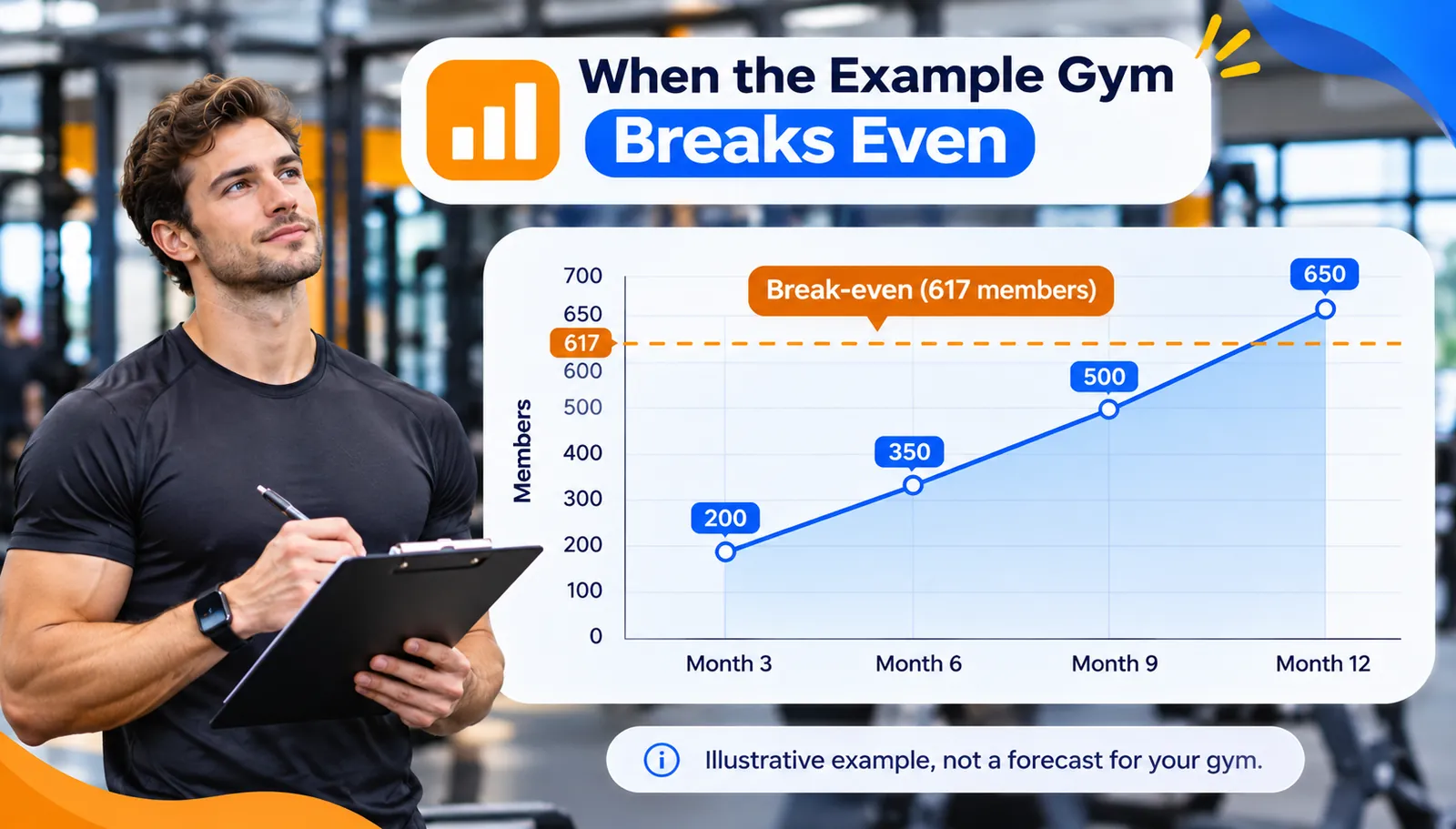
($45,000 – $8,000) ÷ ($65 – $5) = 617 members (rounded up)
This gym needs about 617 members to cover its modeled monthly expenses. In the growth forecast below it passes 617 members in month 12.
Include a Realistic Membership Growth Forecast
| Month | Active members | Membership revenue |
|---|---|---|
| 3 | 200 | $13,000 |
| 6 | 350 | $22,750 |
| 9 | 500 | $32,500 |
| 12 | 650 | $42,250 |
In month 3, membership revenue is $13,000 against $45,000 in fixed costs. That gap is why the plan carries a working capital reserve. When creating your cash flow forecast, take into account member losses, seasonal demand and marketing costs.
What About Funding?
Sources of funding include private investors, personal savings, business partners, commercial loans and SBA financing.
When requesting an SBA loan, provide a detailed explanation of the funding amount requested, how funds will be used, business projections and the plan for repayment.
What Does a Fitness Business Plan Example Look Like?
Imagine a 5,000-square-foot independent fitness center, called FitCore Fitness Center, located in a suburban market in the United States.
It’s a business model that centers around low-cost memberships, personal training and group classes.
| Business Element | Example |
|---|---|
| Facility size | 5,000 sq. ft. |
| Gym business model | Independent gym |
| Target market description | Working adults and community members living in the area |
| Primary revenue | Memberships |
| Secondary revenue | Personal training and classes |
| Average membership price | $65 |
| Initial capital requirement | $500,000 |
| First-year member target | 650 |
Sample SWOT Analysis
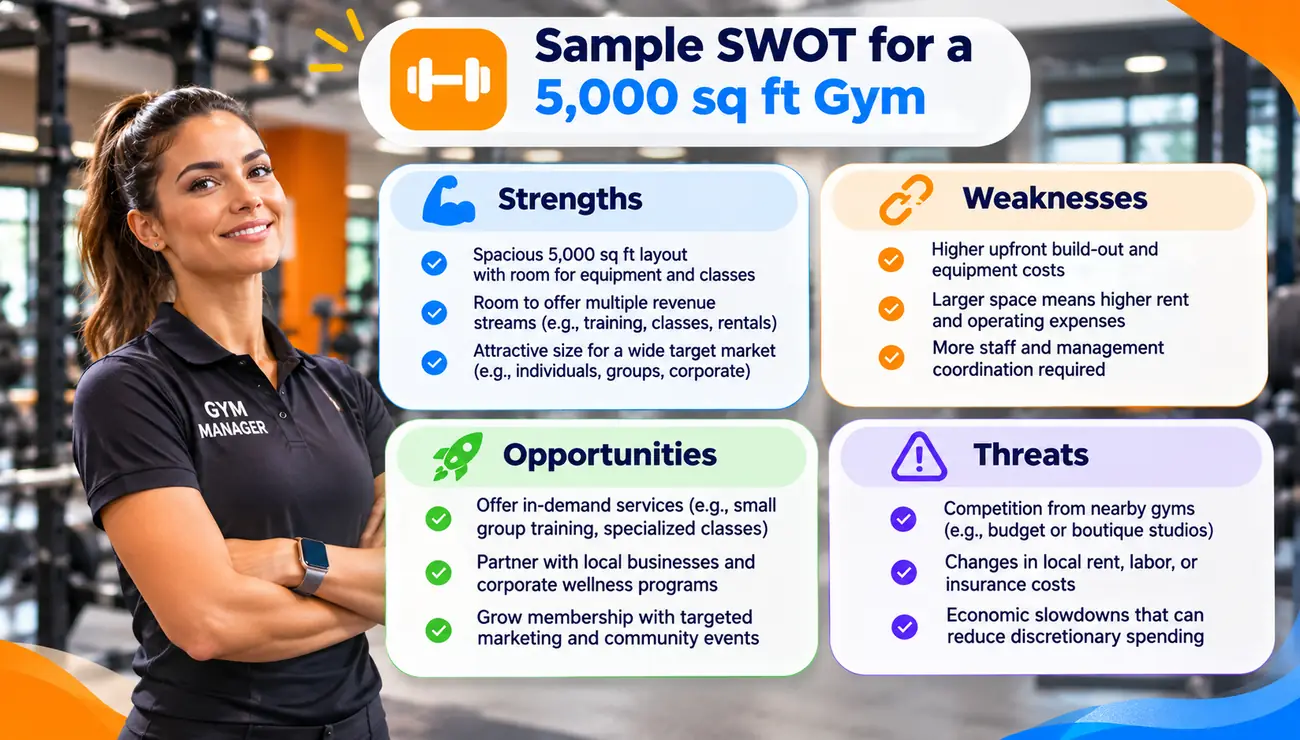
Strengths
- Convenient location
- Multiple membership options
- Additional PT revenue
Weaknesses
- Heavy up-front capital costs
- Limited brand recognition
Opportunities
- Local business partnerships
- Referral marketing
- Small-group coaching
Threats
- Established competitors
- Increasing rental and operating expenses
- Membership cancellations
This gym business plan example illustrates how business strategy, pricing, operations and financial projections fit together. The figures in your own plan should be based on researched figures and current market conditions.
What Are the Most Common Gym Business Plan Mistakes?
Make sure you do not make these mistakes when creating your gym business plan template.
- Optimistic membership ramp: Use conservative projections for membership gains
- Ignoring member churn: Include cancellation assumptions
- Guessing startup costs: Get quotes from suppliers
- No cash reserve: Model cash inflows and outflows month by month and keep a working capital reserve
- Ignoring local competitors: Check out the competition in the area
- Underfunding technology: Budget for gym management software
- Underfunding marketing: Include launch and ongoing campaigns
- Skipping maintenance: Set aside a regular maintenance budget
Your business plan should also be updated on a regular basis. Track performance against your forecasts monthly and make changes if needed.
What Can GymRoute Do for Your Gym Business?
Once the gym is open, billing, memberships, scheduling and door access all need managing. As membership grows, handling these by hand gets harder.
GymRoute is gym management software that covers the tech stack above. When you build it into your plan, these are the areas to cover:
- Membership management: Keep member records and plans in one place
- Billing: Automate recurring payments
- Access control: Tie door access to membership and payment status
- Scheduling and CRM: Book classes and follow up with leads and members
- Digital forms and reporting: Collect waivers online and track membership numbers
For instance, if a member’s subscription expires, then your access management workflow should also update their membership status.
Conclusion
If you have not yet decided to launch a gym, read our guide on how to start a gym, the cost to start a small gym, and our CrossFit gym business plan for a niche example. For another niche example, see our climbing gym startup plan.
To wrap up, you should have a clear strategy for building your gym business. The key to building a successful fitness business is having a clear idea, reasonable financial projections, and knowledge of the demand in the area.
A gym business plan template will assist you in planning out your start-up costs, membership charges, advertising and marketing efforts, the running of your gym, and your long-term financial objectives.
But it shouldn’t end with opening day, though. You also need to deal with memberships, payments, access rights, maintenance and member retention. Use this guide’s free template, add your research and create an action plan for your gym!
Frequently Asked Questions (FAQs) About Gym Business Plan
What is a gym business plan template?
A gym business plan template is a formal document that can assist any entrepreneur in planning a business idea, the target market they are interested in, the nature of the services they are going to offer, the pricing they will charge, marketing strategies and approaches they will use, the operation of the business, and the financial projections they will make.
What is the business plan for gym?
Outline your business idea, conduct market research, define your target members, work out pricing, create a marketing plan and make realistic financial forecasts.
Is there a free gym business plan template that I can download?
Yes. Download the template in this guide as a Word file, edit it in Word or Google Docs, and save or print it as a PDF.
What are the start-up expenses for a fitness center in the USA?
The costs vary from one location to another, according to the size of the facility, the equipment to be installed, any renovations, and the staff. A small studio will need significantly less money than a large fitness center. Create a location-specific budget based on real quotes. See the cost to start a small gym for more detail.
What should be the financial forecast of a gym business plan?
Cover start-up expenses, operating costs, revenues, cash flow, profit and loss statements, and break-even analysis.
Is a gym business plan necessary for an SBA loan?
Your business plan can assist in an SBA loan application by clarifying your business model, financial projections and loan repayment plan. Specific requirements depend on the lender and loan program.
What software is necessary to have in a gym business plan?
Think about membership management, access control, billing software, scheduling, CRM and financial reporting software.
What is the ideal length of a gym business plan?
There is no fixed length. The SBA says traditional plans can run to dozens of pages, while a lean plan is typically one page. Use a shorter plan for internal planning and a fuller one for lenders.