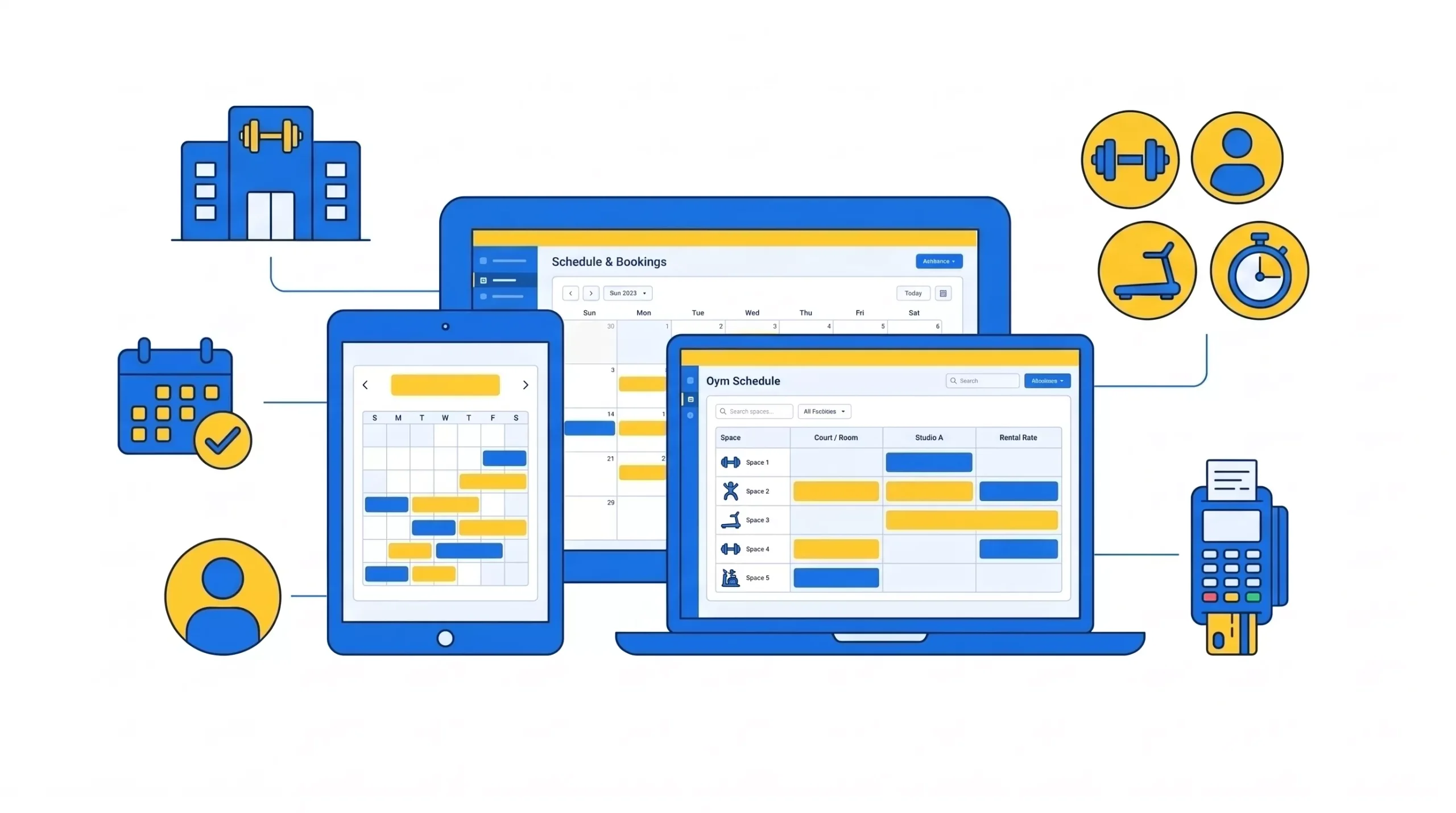
A gym pre-sale campaign generates revenue and builds membership before opening by offering exclusive deals to early members. Successful campaigns require strategic pricing tiers, compelling marketing, legal compliance, and proper software tracking to maximize conversions and create buzz.
Launching a new gym comes with significant upfront costs, but a well-executed pre-sale campaign can provide the capital needed to cover equipment, staffing, and marketing while building a loyal member base from day one. A strong pre-sale also depends on clear marketing strategies for new gyms, because your early messaging needs to build trust before people can see the finished facility. For new gym owners, the pre-sale phase isn’t just about selling memberships; it’s about validating your business concept, creating community excitement, and establishing financial stability before you even sign your first lease. This comprehensive guide will walk you through every aspect of running a successful gym pre-sale campaign that positions your gym for immediate success upon opening.
What are the most effective gym pre-sale membership tiers and pricing strategies?
Pricing is the foundation of any successful gym pre-sale campaign, and getting it wrong can either leave money on the table or deter potential members from joining. The key is to create multiple membership tiers that appeal to different segments of your target market while maximizing revenue. Most successful gym pre-sales offer three to four distinct tiers, each with progressively higher price points and corresponding benefits.
How to structure gym pre-sale membership pricing tiers?
Your membership tiers should create clear value differentiation while encouraging upgrades to higher-priced options. Consider these proven structures:
- Basic tier: Entry-level pricing with essential gym access, suitable for budget-conscious members or those who primarily use cardio equipment
- Standard tier: Mid-range option with additional benefits like group classes, slightly longer hours, or access to premium equipment
- Premium tier: Highest price point with the most comprehensive benefits, including personal training sessions, spa access, or VIP amenities
- Founding member tier: Limited-time exclusive offer with the best rates and lifetime benefits, designed to create urgency and reward early adopters
How to price gym memberships for pre-sale?
When determining your pre-sale pricing, consider these factors:
- Market research: Analyze competitors’ pricing in your area to establish a competitive baseline
- Cost analysis: Calculate your operational costs per member to ensure pricing covers expenses while providing profit
- Perceived value: Set prices that reflect the premium experience you’ll provide, not just the current state of your unfinished facility
- Early Bird Incentives: Offer significant discounts (20-40% off regular rates) for the first wave of pre-sale members to create momentum
According to industry data, gyms that implement tiered pre-sale pricing see approximately 35% higher conversion rates than those with single-option pricing. The secret lies in making the middle option (your standard tier) appear as the best value proposition, a psychological trick known as the Goldilocks effect.
How to create urgency in gym pre-sales without deep discounts?
Many gym owners believe that discounts are the only way to create urgency in pre-sales, but this approach can devalue your brand and attract price-sensitive members who are less likely to stay long-term. The most successful pre-sale campaigns leverage psychological triggers and exclusivity rather than just price reductions to drive action.
What is a founding member gym deal?
A founding member deal is a limited-time offer that rewards early adopters with exclusive benefits they can’t obtain later. This creates urgency because members know they must act now to secure these advantages. Effective founding member deals typically include:
- Lifetime rate lock: Guaranteeing members they’ll never pay more than their initial membership fee
- Exclusive access: Priority booking for popular classes or personal training sessions
- Special recognition: Plaques, naming rights, or other acknowledgment in the facility
- Bonus services: Free months, merchandise, or additional services included at no extra cost
How to create urgency in gym pre-sale campaigns without discounts?
Here are proven strategies to create urgency without resorting to price cuts:
- Limited availability: Set a cap on the number of founding member spots available (e.g., “Only 50 founding member spots available”)
- Tiered deadlines: Implement price increases at specific dates (e.g., “Founding member pricing ends in 30 days”)
- Exclusive events: Host pre-sale-only events that members can only attend by signing up early
- Social proof: Showcase the number of people who have already joined to leverage FOMO (fear of missing out)
- Early access: Offer members who join during pre-sale the ability to use the facility before the grand opening
Research shows that campaigns incorporating multiple urgency triggers convert at nearly 2.5 times the rate of those relying solely on discounts. The key is to make members feel they’re missing out on something valuable if they don’t act now.
What legal requirements should gym owners know for pre-sales?
Pre-selling gym memberships involves significant legal considerations that vary by jurisdiction. Failure to comply with these requirements can result in fines, lawsuits, and damage to your reputation. Understanding these legal aspects before launching your campaign is essential for protecting both your business and your members.
What are the legal requirements for gym pre-sales?
The legal requirements for gym pre-sales typically include:
- Business registration: Properly registering your business entity as required by your state
- Sales permits: Obtaining the necessary permits to sell memberships before opening
- Consumer protection compliance: Adhering to laws governing advance sales of services
- Contract requirements: Include specific clauses in your membership agreements to comply with state regulations
- Refund policies: Establishing clear refund policies that meet legal standards
Legal considerations for gym pre-sales in different states
State laws regarding gym pre-sales vary significantly, with some states having specific regulations governing fitness center memberships. For example:
- California: Requires gyms to provide a 3-day right to cancel and specific disclosures in contracts
- New York: Mandates that fitness centers maintain a trust account for prepaid memberships
- Florida: Requires specific language in contracts regarding facility completion dates
- Texas: Has specific requirements regarding membership cancellation and refund policies
Before launching your pre-sale campaign, consult with a legal professional familiar with fitness industry regulations in your state. Additionally, consider purchasing business liability insurance that covers pre-sale activities, as this can protect you from potential claims related to your pre-sale promises.
How to use gym membership software to track pre-sales performance?
Tracking your pre-sales campaign performance manually is not only time-consuming but also prone to errors. Modern gym membership software provides comprehensive tools for managing pre-sales, tracking conversions, and analyzing data to optimize your campaign in real-time. This is where connected gym marketing systems become valuable, because they help you manage lead capture, follow-ups, campaign data, and member communication in one place. For new gym owners, these platforms can be the difference between a successful launch and a missed opportunity.
What gym membership software works best for pre-sales?
The best gym membership software for pre-sales campaigns should include these essential features:
- Pre-sale dashboard: A dedicated interface to track pre-sales metrics and conversion rates
- Member management tools: Capabilities to manage pre-sale members separately from regular members
- Payment processing: Secure payment processing that can handle deposits and installment plans
- Communication features: Automated email and SMS tools for nurturing pre-sale leads
- When comparing the best marketing software for gyms, look for tools that connect pre-sale lead tracking, automated messaging, payment collection, and reporting instead of treating marketing as a separate task.
- Reporting analytics: Comprehensive reporting on pre-sales performance, member demographics, and revenue projections
How to use gym management software for pre-sale analytics?
Implementing gym management software for your pre-sale campaign allows you to:
- Track conversion funnels: Monitor how prospects move from initial interest to completed purchase
- Analyze member acquisition costs: Calculate exactly how much you’re spending to acquire each pre-sale member
- Segment your audience: Categorize prospects based on interests, demographics, or engagement level
- Automate follow-ups: Set up automated sequences to nurture leads who haven’t completed their purchase
- For leads who are interested but not ready to buy immediately, email marketing for gyms can keep your pre-sale offer, opening updates, and founding member benefits in front of them without relying only on phone calls or social media.
- Forecast revenue: Use historical data and current conversion rates to predict pre-sale revenue
According to industry benchmarks, gyms using specialized membership software for pre-sales see an average of 28% higher conversion rates and 19% more accurate revenue forecasting compared to those using manual methods or basic CRM systems. The data insights gained from these platforms can inform every aspect of your pre-sales strategy, from marketing messaging to pricing adjustments.
How to structure a gym pre-sale campaign timeline for maximum conversions?
A well-structured timeline is critical for a successful gym pre-sale campaign. Without proper planning, you risk launching too early (when your marketing materials aren’t ready) or too late (when you’ve missed your revenue targets). The optimal pre-sale timeline varies based on your specific circumstances, but most successful campaigns follow a phased approach that builds momentum toward opening day.
How long should a gym pre-sale campaign last?
Most gym pre-sale campaigns last between 60 and 90 days, divided into distinct phases:
- Phase 1: Building anticipation (2-4 weeks): Teaser marketing to generate interest without full details
- Phase 2: Launch and founding member drive (3-6 weeks): Full campaign launch with exclusive founding member offers
- Phase 3: Mid-campaign adjustment (1-2 weeks): Analysis and optimization based on early results
- Phase 4: Final push (2-3 weeks): Urgency-building tactics to close remaining sales before opening
How to create a gym pre-sales timeline that maximizes conversions?
To create a timeline that maximizes conversions, follow this structured approach:
- Set your opening date: Work backward from your planned opening to determine the pre-sale start date
- Establish key milestones: Set specific targets for each phase (e.g., 25% of the goal by the end of Phase 1)
- Plan marketing phases: Develop specific marketing activities for each timeline phase
- If your campaign includes ads, landing pages, emails, SMS reminders, and retargeting, automating your gym marketing strategy helps every phase stay consistent instead of depending on manual follow-up.
- Create content calendar: Schedule all content, emails, and social media posts in advance
- Keep it flexible: Allow for adjustments based on performance data
A gym pre-sale timeline template should include buffer periods for unexpected delays and incorporate regular performance reviews. The most successful campaigns typically see 40-60% of their total pre-sales during the final two weeks, making the final push phase critically important for meeting revenue goals.
What should be included in a gym pre-sale contract?
Your pre-sale membership contract is a legally binding document that protects both your gym and your members. A well-drafted contract should clearly outline what members can expect while protecting your business from potential disputes. For new gym owners, getting this document right is essential for maintaining positive member relationships from the very beginning.
What should I include in a gym membership pre-sale contract?
Essential elements of a comprehensive gym pre-sale contract include:
- Parties and definitions: Clear identification of the gym and member, with definitions of key terms
- Membership details: Specific tier, price, duration, and included benefits
- Payment terms: Payment schedule, accepted payment methods, and late fee policies
- Facility information: Details about the planned facility, equipment, and amenities
- Opening date: The anticipated opening date and provisions for delays
- Cancellation policy: Terms for canceling the agreement and obtaining refunds
- Liability waiver: Release of liability for injuries sustained before facility opening
- Governing law: The state laws that will govern the agreement
Gym pre-sale contract clauses to include
Beyond the basic requirements, consider adding these protective clauses:
- Modification clause: Allows you to make reasonable changes to the facility or services with notice
- Force majeure: Protects you from liability for delays beyond your control
- Renewal terms: Clear explanation of what happens when the initial term expires
- Transfer restrictions: Prohibit members from selling or transferring their membership
- Dispute resolution: Preferred method for resolving disagreements (arbitration, mediation)
Always have your pre-sale contract reviewed by a legal professional before distribution. While templates can provide a starting point, your specific circumstances may require customized language to ensure full legal compliance and protection.
How to market gym pre-sales effectively on social media?
Social media is arguably the most powerful channel for promoting gym pre-sales, offering direct access to your target market at a relatively low cost. However, effective social media marketing for pre-sales requires more than just posting promotional content; it’s about building community, creating anticipation, and establishing your gym’s unique identity before you even have a physical location.
How to Market Gym Pre-Sales to Local Community Members
When targeting local community members on social media, focus on these strategies:
- Hyper-local targeting: Use location-based targeting to reach people within a specific radius of your gym
- Community engagement: Participate in local Facebook groups and community forums to establish a presence
- Local influencers: Partner with micro-influencers in your fitness community for authentic promotion
- Neighborhood-specific content: Create content that speaks to the specific fitness needs and interests of your local area
- Local events: Host or sponsor local fitness events to build buzz and connections
How to use social media effectively for gym pre-sales
To maximize your social media impact, implement these tactics:
- Content mix: Balance promotional content with valuable fitness tips, behind-the-scenes updates, and member testimonials
- Platform strategy: Use Instagram for visual content of your progress, Facebook for community building, and TikTok for engaging short-form videos
- User-generated content: Encourage early sign-ups to share their excitement with branded hashtags
- Paid advertising: Invest in targeted ads that promote your pre-sale to specific demographics
- Retargeting campaigns: Show ads to people who’ve visited your website but haven’t signed up
According to recent fitness industry data, gyms that implement a multi-platform social media strategy for pre-sales see 3.2 times higher conversion rates than those relying on a single platform. The key is to create consistent, engaging content that builds anticipation while clearly communicating the value of joining during the pre-sale phase.
How to create a successful gym pre-sale launch event?
Your pre-sale launch event is the single most important moment in your campaign, setting the tone for the entire pre-sale period and determining initial momentum. A successful launch event creates immediate buzz, generates significant sign-ups in a short period, and establishes your gym as a must-join community from the very beginning.
How to create a gym pre-sales launch event?
To create a compelling pre-sale launch event, follow these steps:
- Choose the right format: Decide between a physical event at a temporary location, a virtual event, or a hybrid approach
- Develop compelling messaging: Craft a clear, exciting message about why people should join now
- Set a clear timeline: Plan the event with specific segments and a call-to-action timing
- Prepare your team: Train staff or volunteers to handle inquiries and process sign-ups efficiently
- Promote aggressively: Use all available channels to drive attendance to your launch event
Gym pre-sale launch ideas
Consider these innovative launch event concepts:
- Grand opening preview: Invite local influencers and community leaders for an exclusive preview of your plans
- Founding member celebration: Host a party celebrating the first members to join, creating social proof
- Fitness challenge: Organize a community fitness event that showcases your gym’s philosophy
- Pop-up gym experience: Create temporary workout stations in a public space to demonstrate your offerings
- VIP launch party: Host a ticketed event with entertainment and refreshments for serious prospects
The most successful gym pre-sale launch events combine elements of exclusivity, community building, and a clear value proposition. By creating an experience that makes early members feel special and connected to your vision, you establish the foundation for long-term member loyalty.
How to transition pre-sale members into long-term retention after opening?
Acquiring pre-sale members is only half the battle; retaining them beyond the initial excitement period is what determines your gym’s long-term success. The transition from pre-sale to regular membership is a critical period where many gyms lose members who may have been primarily motivated by exclusive opening deals rather than genuine commitment to the fitness journey.
Best practices for pre-sale member onboarding
To ensure pre-sale members become long-term loyal members:
- Personal welcome: Create a personalized welcome experience for each pre-sale member
- Orientation program: Develop a comprehensive onboarding process that introduces members to all aspects of your facility
- Goal setting sessions: Work with members to establish clear fitness goals and track progress
- Community integration: Facilitate connections between pre-sale members to build relationships
- Feedback collection: Actively seek input from pre-sale members to improve their experience
How to maintain pre-sale member engagement after opening?
Keep pre-sale members engaged with these strategies:
- Exclusive events: Host events exclusively for founding members to maintain their special status
- Progress tracking: Provide regular updates on their progress toward fitness goals
- Recognition programs: Acknowledge milestones and achievements publicly
- Feedback implementation: Show members how their suggestions have been implemented
- Renewal Incentives: Offer preferential renewal terms to reward long-term commitment
Studies show that gyms with structured onboarding programs for pre-sale members achieve retention rates up to 40% higher than those without. The key is to leverage the pre-sale relationship as a foundation for long-term engagement rather than treating it as merely a transactional sales opportunity.
How to measure the ROI of your gym pre-sale campaign?
Measuring the return on investment (ROI) of your pre-sale campaign goes beyond simply counting membership sales; it involves analyzing the financial impact, brand value, and member acquisition quality to determine the true success of your efforts. For new gym owners, understanding these metrics is essential for making informed decisions about future marketing investments and business strategies.
How to track gym pre-sale campaign success?
Key metrics to track for pre-sale campaign success include:
- Conversion rate: Percentage of prospects who become paying members
- Customer acquisition cost: Total marketing spend divided by the number of members acquired
- Average revenue per member: Total revenue divided by the number of members
- Member quality score: Assessment of member likelihood to stay beyond the initial term
- Brand awareness lift: Increase in local recognition and social media following
How to measure the ROI of gym pre-sale campaigns?
To calculate your pre-sale campaign ROI:
- Calculate total revenue: Sum all membership revenue from pre-sales
- Calculate total costs: Include all marketing expenses, software costs, and staff time
- Determine net profit: Subtract total costs from total revenue
- Calculate ROI: Divide net profit by total costs and multiply by 100 for a percentage
- Compare to benchmarks: Assess your ROI against industry averages (typically 150-300% for successful campaigns)
Advanced analytics should also track the long-term value of pre-sale members compared to those who join later, as pre-sale members often demonstrate higher retention rates and lifetime value. By implementing comprehensive tracking from the beginning, you can continuously optimize your pre-sale strategy and maximize returns for future campaigns.
As you implement these strategies for your gym pre-sale campaign, remember that the most successful campaigns combine compelling offers with genuine community building and transparent communication. The goal isn’t just to sell memberships but to create a foundation of loyal members who will champion your gym for years to come. With careful planning, execution, and measurement, your pre-sale campaign can provide the financial stability and member base needed for a successful gym launch and long-term growth.
FAQs
How do you run a gym pre-sale campaign that actually sells memberships?
A successful gym pre-sale campaign requires strategic pricing tiers with clear value differentiation, compelling marketing that creates urgency through exclusivity rather than just discounts, proper legal compliance, and effective use of gym membership software for tracking and analytics. Building community and providing transparency about your gym’s vision are also critical for converting prospects into members.
What should I include in a gym membership pre-sale contract?
A comprehensive gym pre-sale contract should include membership details, payment terms, facility information, opening date, cancellation policy, liability waiver, governing law, and protective clauses like modification rights and force majeure provisions. Always have your contract reviewed by a legal professional to ensure compliance with state-specific regulations.
How long should a gym pre-sale campaign last?
Most successful gym pre-sale campaigns last between 60-90 days, divided into distinct phases: building anticipation (2-4 weeks), launch and founding member drive (3-6 weeks), mid-campaign adjustment (1-2 weeks), and final push (2-3 weeks). This timeline allows for building momentum while maintaining urgency toward the end.
What are the legal requirements for gym pre-sales?
Legal requirements for gym pre-sales vary by state but typically include business registration, sales permits, consumer protection compliance, specific contract clauses, and refund policies. For example, California requires a 3-day right to cancel, while New York mandates trust accounts for prepaid memberships. Always consult with a legal professional familiar with fitness regulations in your state.
How to create urgency in gym pre-sales without deep discounts?
Create urgency through limited availability (capping founding member spots), tiered deadlines with price increases, exclusive events for early members, social proof showing how many have already joined, and early access to the facility before opening. These psychological triggers leverage FOMO (fear of missing out) without devaluing your brand through excessive discounts.
Key Takeaways
- Effective gym pre-sale campaigns require strategic membership tiers with clear value differentiation to maximize conversions and revenue.
- Creating urgency through exclusivity and limited availability is more effective than relying solely on discounts for driving pre-sales.
- Legal compliance varies by state and requires specific contract clauses, refund policies, and business registration to protect both the gym and its members.
- Gym membership software provides critical tracking and analytics capabilities that can increase conversion rates by up to 28% compared to manual metho.ds
- A well-structured 60-90 day pre-sale timeline with distinct phases builds momentum and maximizes conversions, with 40-60% typically occurring in the final two weeks.
- Successful transition from pre-sale to regular membership depends on personalized onboarding and ongoing engagement strategies that leverage the pre-sale relationship.
Ready to launch your gym pre-sale campaign with expert guidance? GymRoute provides comprehensive gym membership software and pre-sale campaign tools designed specifically for new gym owners. Book a free demo today to learn how our platform can help you maximize pre-sales revenue and build a loyal member base before opening day.