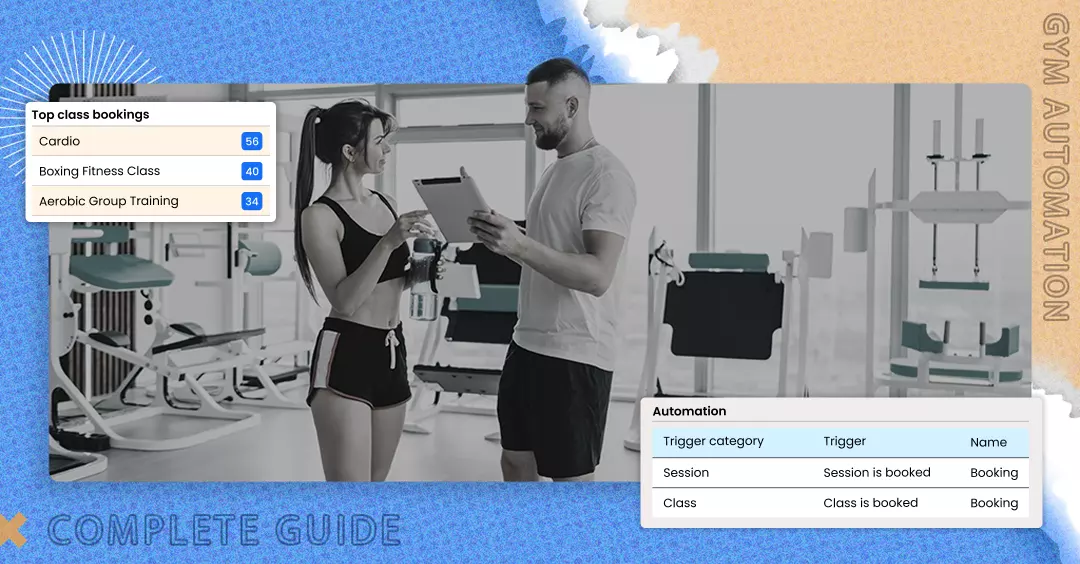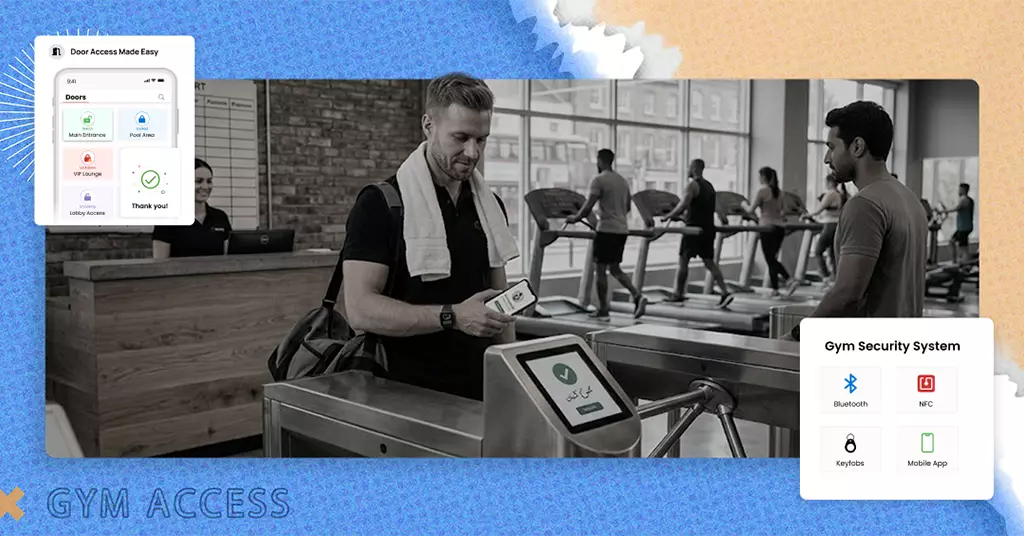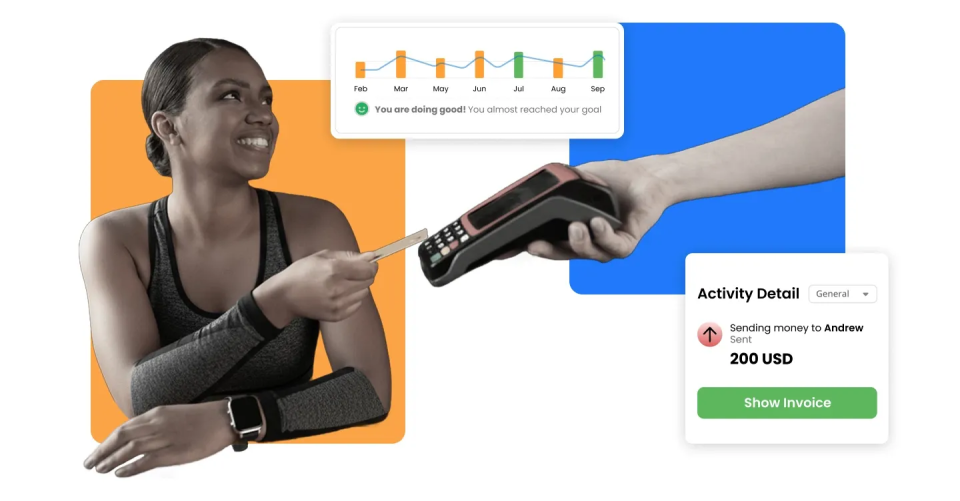
In 2026, choosing gym management software in the United States is not a convenience; it is a business move. Running a fitness business in the US requires multi-managing memberships, state-by-state tax rules, digital waivers, recurring billing, access control, and a rising expectation for mobile-first member experiences. The right software does not just automate tasks; it stabilizes your revenue, reduces admin hours, and supports growth across one or multiple locations.
Here are the 9 best US-based gym management software you can consider in 2026. We have done thorough research on their strengths, pricing, and best-fit cases, so you don’t have to. The goal is simple: Help you choose a system that supports your operations, not complicates them.
What US gym owners should look for in gym management software?
Before looking into the top platforms, here are the features that matter most in the US market specifically.
- US-friendly billing + reliable payment processing on credit and debit cards, ACH/bank transfers, recurring billing.
- Tax support for state-level sales tax, membership tax variations and including retail and local fitness service.
- Liability waivers & digital compliance to enforce laws, consent requirements, liability policies, and health screening documentation requirements.
- Scalability for multi-location or franchise growth for centralized billing, unified reporting, and multi-location dashboards.
- Member engagement tools like mobile bookings, push notifications, automated reminders, class capacity management, community & challenges.
- Transparent pricing without hidden fees. Ask for clear base prices, transaction fees, and add-on transparency.
With that in mind, here are the top 9 platforms positioned for US gyms in 2026
1.GymRoute
Best for hybrid gyms and growing fitness businesses wanting modern, automation, and clear pricing
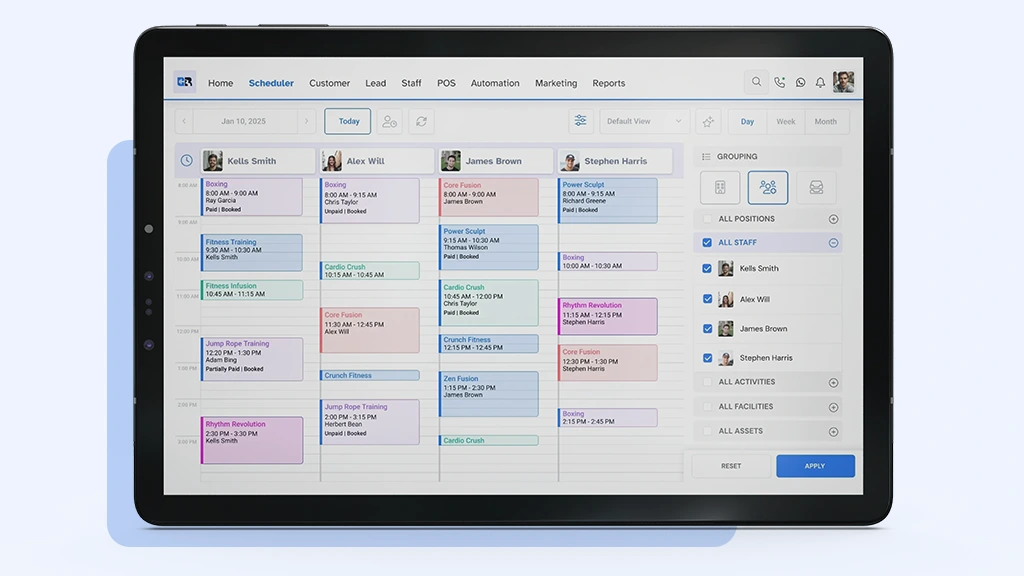
GymRoute is a newer but fast-growing management platform designed for US fitness businesses. It is great for gyms that want intuitive workflows, automation, and reliable billing without the heavy setup burden common in legacy systems.
In terms of functionality and software, the interface is clean, mobile-friendly, and built around key operational points: membership plans, scheduling, payments, marketing automations, and lead funnels.
Where it stands out
- Strong mobile booking experience.
- Multi-location support on higher tiers.
- Customizable branded mobile apps.
- Clear and published pricing instead of custom quotes.
- Integrated access control system for tighter security.
- Automated reminders, retargetting, and follow-ups.
- Fast onboarding, with minimal technical setup.
- US-focused payment architecture and recurring billing.
- Modern dashboard with real-time metrics (visits, revenue, active members).
| Pros | Cons |
| Very intuitive interface | Cloud-based software |
| 24/7 human support | Limited free trial |
| Free data migration & easy onboarding |
2. RhinoFit
Suitable for gyms looking for an affordable platform with no frills.
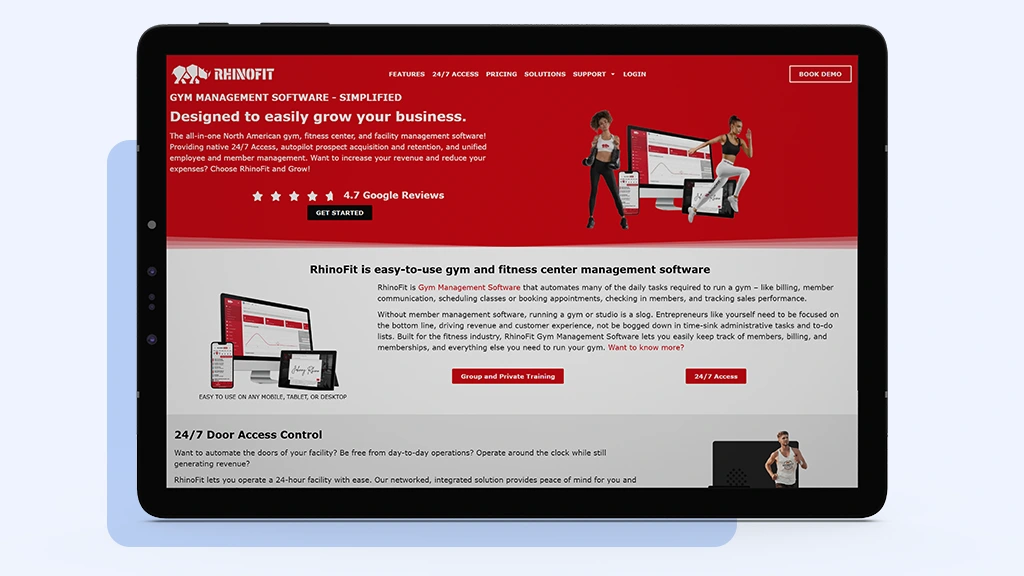
RhinoFit is well-known for being one of the most budget-friendly fitness software options available in North America. It focuses on essential operational tools: class scheduling, waivers, payments, attendance tracking, and basic reporting.
Despite its simple interface, the platform supports door access hardware, making it appealing for small 24/7 gyms that need unattended entry without enterprise-level pricing.
| Pros | Cons |
| Extremely affordable | Limited marketing features |
| Easy to learn | Outdated UI and unsuitable for large or hybrid gyms |
| Good for simple operations |
3. TeamUp
Best for class-based studios and boutique gyms
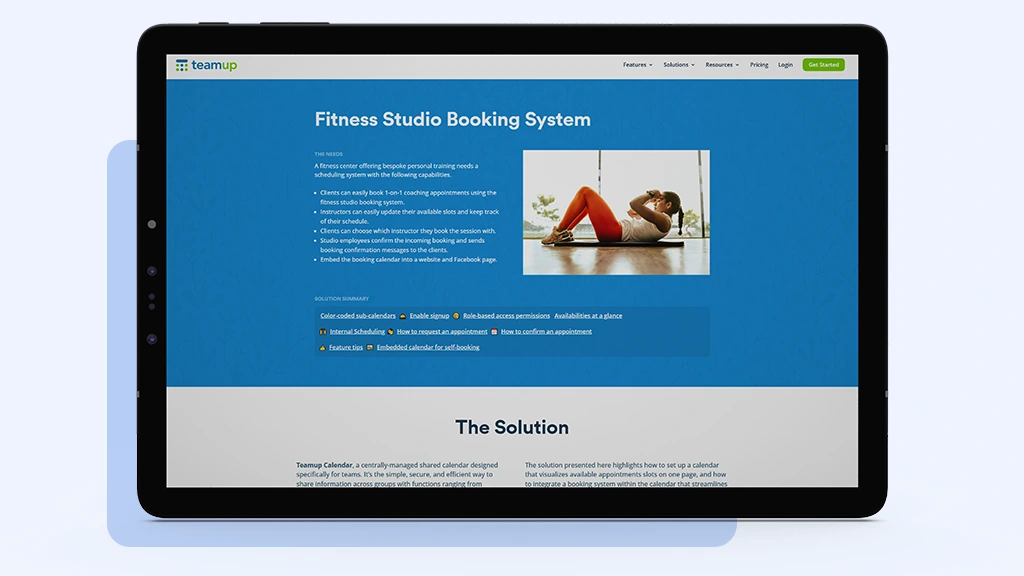
TeamUp offers a polished, member-friendly experience built around scheduling and class management. This is suitable for US studios, especially those running groups, packs, and appointment-based classes. It is appreciated for its booking simplicity, dependable payment handling, and clean branded experience.
The platform integrates well with Zoom (for virtual classes), offers strong instructional tools, and provides solid performance reporting.
| Pros | Cons |
| Ease of use | Not ideal for 24/7 gyms needing access control |
| Excellent customer support | Limited workout tracking |
| Mobile app gets finicky sometimes |
4. PushPress
Best for strength/CrossFit gyms that want performance-focused workflows.
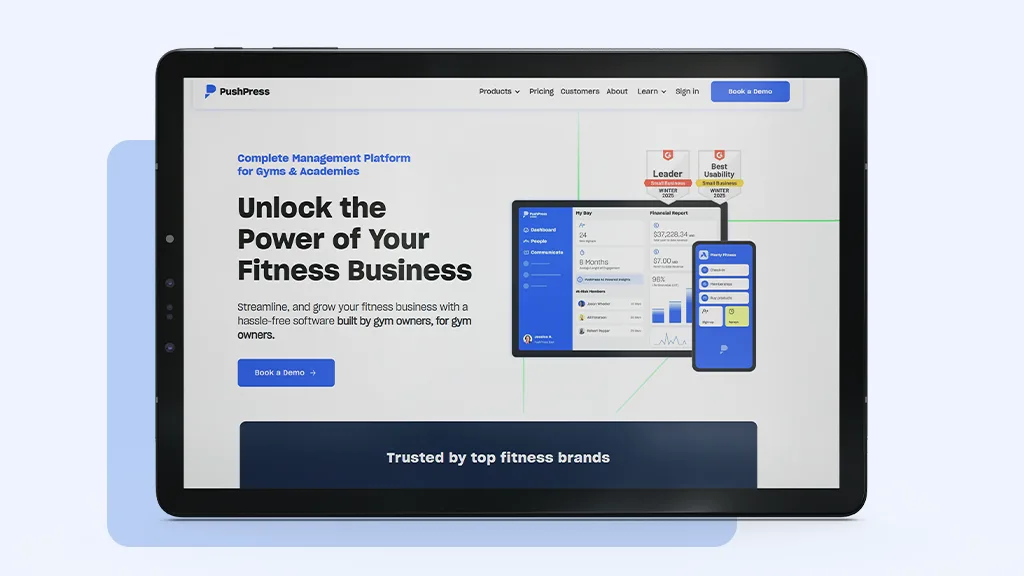
PushPress has built its reputation within the functional fitness and strength training communities. Many CrossFit boxes prefer it because it feels natural for their operational style: class caps, recurring memberships, waivers, Point Of Sale, retail, and automated check-ins. PushPress also offers a range of product layouts, including a branded app, website services, and integrations for gym performance tracking.
| Pros | Cons |
| Strong customer support | Customization is not so great |
| Easy to use | Limited enterprise features |
| Works well for community gyms | Add-ons needed for advanced marketing |
5. Zen Planner
Best for gyms that need progress tracking and long-term reliability
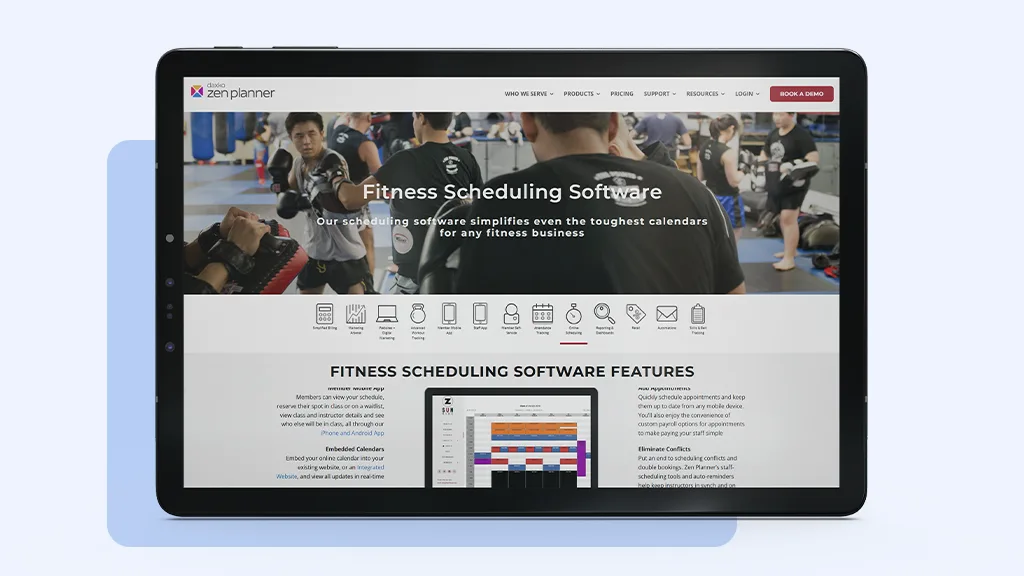
Zen Planner is one of the great US-based gym management systems. Its broad feature set, including scheduling, billing, reporting, attendance, workout tracking, belt or rank progression, and staff management, makes it popular among martial arts schools and multi-discipline gyms.
Its longevity also means many operational processes (tax handling, PIF memberships, freeze options) are well-established
| Pros | Cons |
| Learning curve for new users | Frequent bugs and glitches |
| Interface can feel dated | Poor customer support |
| Billing issues |
6. Exercise.com
Suitable for gyms wanting a branded app and deep customization
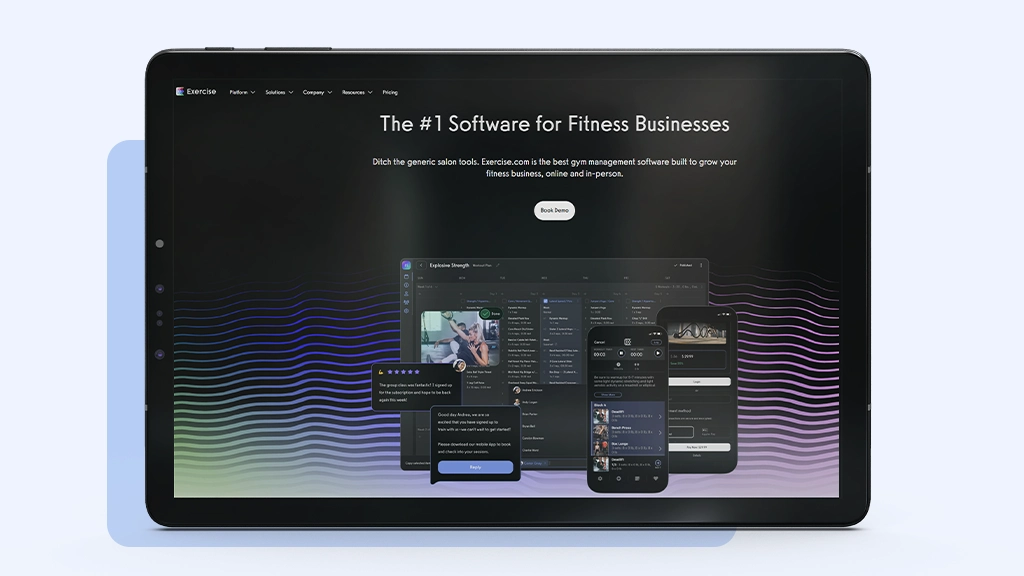
Exercise.com positions itself as a premium platform, not just gym software, but a tailored digital ecosystem. It is known for fully branded apps, custom development work, workout program delivery, and advanced business logic for franchise-style operations.
This is a system for gyms that want advanced digital coaching capabilities, want to deliver high-end programming, or prefer a customize everything.
| Pros | Cons |
| Good customer support | Setup is collaborative and time-consuming |
| Good customization and branding options | Pricing is higher than mid-market levels |
| Clunky client-facing app | |
| Steep learning curve |
7. WellnessLiving
Best for gyms and studios wanting an all-in-one ecosystem
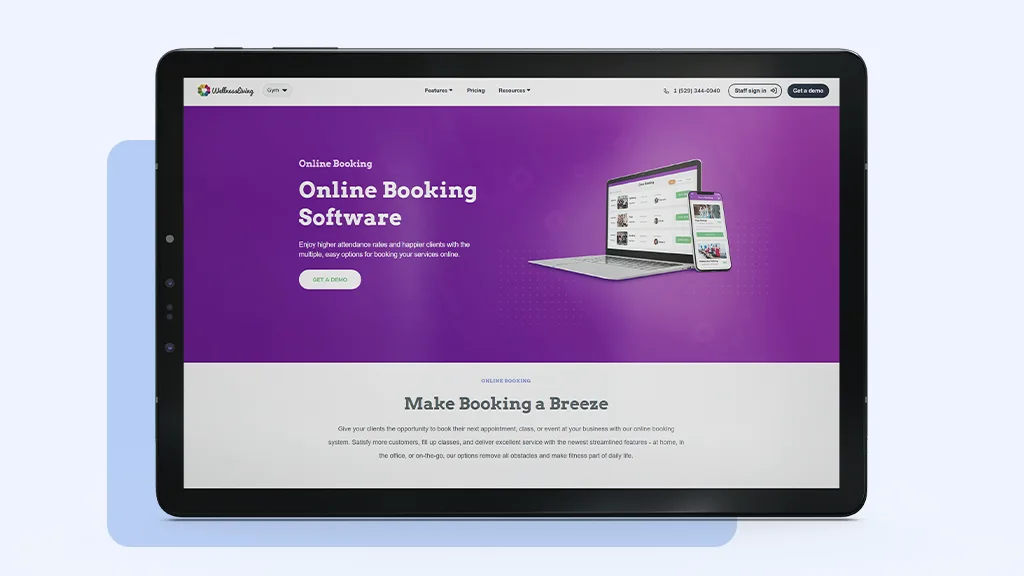
WellnessLiving is widely used across the US by gyms, yoga studios and wellness businesses. It is good for businesses that want robust booking, marketing automation, and built-in CRM tools. It covers everything from attendance to email marketing to reward programs.
| Pros | Cons |
| Very comprehensive | UI can feel complex |
| Strong CRM & marketing tools | Premium features add cost |
| Migration reportedly takes time |
8. Vagaro
Good to start with for gyms, wellness businesses, personal training and hybrid services.
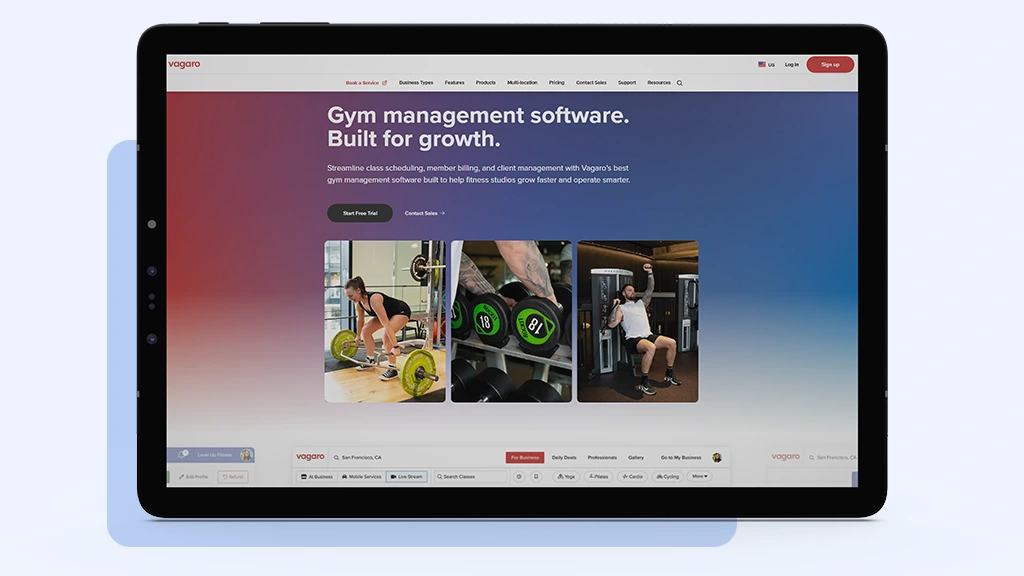
Vagaro started basically in the salon/spa industry, but its fitness side has grown significantly. It appears to US that gyms that offer personal training, physical therapy, wellness services, massage, nutrition consults, or hybrid class schedules.
Because of its roots, Vagaro has excellent appointment tools, add-on options, and staff scheduling features that are much-needed for basic operations in a gym.
| Pros | Cons |
| User-friendly member app | Not specialized for gyms or complex class structure |
| Affordable software to get started | Limited advanced automation |
| Ease of use | Inconsistent customer support |
9. Gymdesk
Suitable for martial arts gyms, combat sports and small independent gyms.
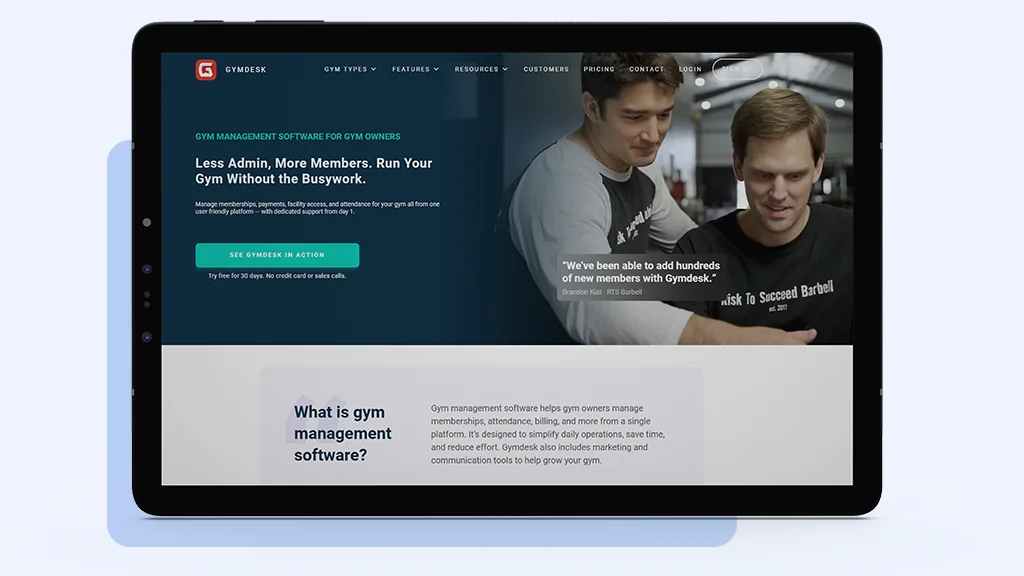
GymDesk is known for its clean interface, transparent pricing and particularly strong alignment with martial arts schools. Features like rank tracking, attendance history, belt progression, family accounts, and waiver management are built to match how combat sports gyms operate. It also works well for general fitness facilities that want an easy-to-run platform without high monthly fees.
| Pros | Cons |
| Ease of use | Limited advanced reporting |
| Limited customization | |
| The company’s recent acquisition has drastically affected the service |
Final words
Selecting the right gym management software is one of the most defining choices you’ll make for your business in 2026. Each platform on this list serves a different operational style, from hybrid gyms to class-driven studios, functional fitness spaces, martial arts schools, and multi-location facilities.
The key is aligning your system with the way your gym actually works: your billing needs, your scheduling demands, your member experience expectations, and the growth you’re planning for. When the software handles the complexity: US tax rules, waivers, payments, and reporting, you gain time back to focus on coaching, retention, and building a stronger community.
With a reliable system in place, your operations become smoother, your revenue steadier, and your capacity to grow significantly stronger.