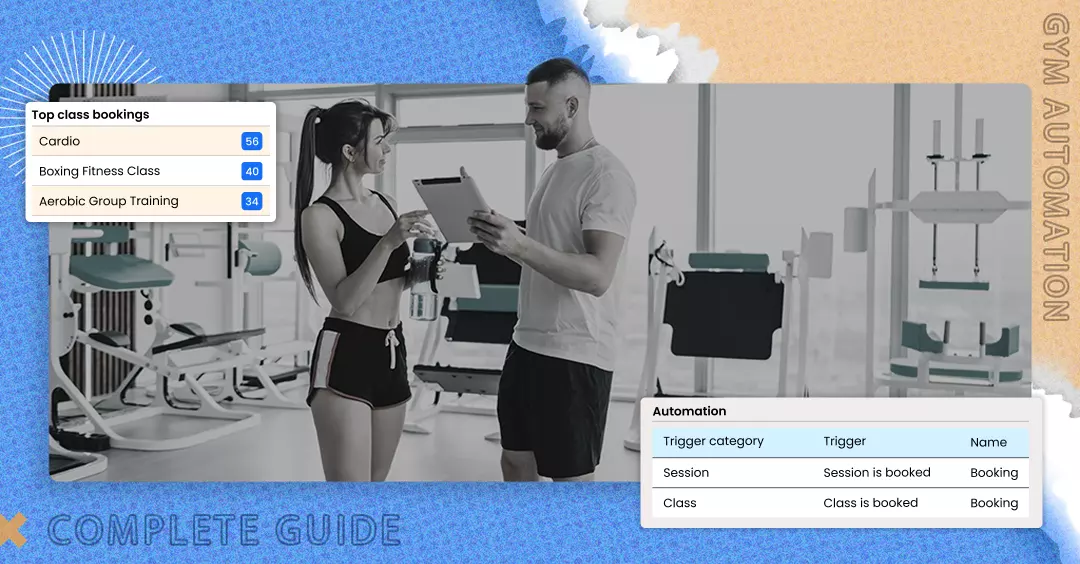
Gym automation helps fitness businesses run more smoothly by handling scheduling, billing, and communication automatically. Instead of manual work, systems send reminders, process payments, and track member activity in real time. This reduces no-shows, improves retention, and saves staff hours every week. Automated messaging, especially SMS, keeps members engaged and informed, leading to better attendance and consistent revenue. By implementing the right workflows and tools, gym owners can focus more on delivering a great experience and less on admin tasks. In a competitive US fitness market, automation is no longer optional. It’s essential for growth, efficiency, and long-term profitability.
Before your gym front desk even opens, problems start stacking up. A payment fails overnight, locking a member out. A late-night lead is still waiting for a reply.
The 6:00 a.m. class is technically full, but two people on the waitlist have no idea if they’re in. One member wants to freeze their plan. Another wants to upgrade. And all of this is happening before your team has had their first coffee.
This is the part of running a gym that rarely gets talked about.
Not the workouts. Not the community. But the constant flow of small, repetitive tasks quietly drains time, energy, and focus. None of them is major on its own. But together, they shape whether your gym feels smooth and professional, or reactive and chaotic.
That’s exactly where gym automation comes in.
Not as a replacement for people, but as the system that handles the repeat work, prevents things from slipping, and keeps your operations running without constant intervention.
Because the goal isn’t to do more work.
It’s about building a gym that runs right even before your day begins.
What is gym automation?
Gym automation refers to the use of software and technology to handle routine tasks in your fitness business without manual effort.
Think of it as your gym operating system, working in the background to keep everything running smoothly.
Core areas of gym automation
A modern gym automation tool typically includes:
- Scheduling: Members book classes or sessions online
- Billing: Automatic payments, renewals, and reminders
- Member Management (CRM): Tracks attendance, preferences, and history
- Communication: Automated SMS, emails, and notifications
- Reporting: Real-time insight into performance and revenue
Instead of juggling spreadsheets, phone calls, and manual follow-ups, everything runs through one connected system.
Why gym automation matters now
There was a time when gym automation sounded optional, maybe even a little fancy. Something for larger brands, multi-location operators, or tech-forward studios with extra budget and extra staff.
That time is gone.
Today, automation is less about ambition and more about basic operational survival. The market is busier. Member expectations are sharper. Staff time is more expensive. And manual systems break fast when more people, more bookings, more member messages start moving through the business every day.
The pressure shows up in familiar places.
Leads go cold because no one followed up quickly enough. Class spots sit empty because reminders were inconsistent. Failed payments stay unresolved longer than they should. Staff spend too much time answering the same questions. Owners make decisions based on instinct because the numbers are scattered across tools that do not really talk to each other.
None of that feels like a massive collapse in the moment. It just feels like drag. Daily drag.
And drag is expensive.
That is why the gyms that feel smooth from the outside usually have structure underneath. A good automation setup not only saves time. It protects momentum. It helps the right thing happen even when the team is busy, the desk is short-staffed, or the owner is not watching every moving part.
It also matches the way people behave now. The modern member expects fast confirmation, easy bookings, clear reminders, and less friction between interest and action. Fitness operators are seeing the same pattern across the industry: digital discovery now shapes first impressions, and mobile booking with simple scheduling has become expected behavior.
So this is not really about “keeping up with trends.” It is about removing avoidable friction from a business model that already has enough moving parts.
The real problems gym automation solves
A lot of software talks about automation as if it were a magic word. It is more useful to look at the actual headaches it fixes.
The “we forget to follow up” problem
This one hurts more than owners realize.
A lead comes in after hours. Maybe they found you through Google. Maybe they clicked on the ad. Maybe they were referred by a friend and finally looked you up while lying in bed, half ready to make a change. They fill out the form. Then nothing happens.
By morning, their motivation has cooled. By afternoon, they are comparing other gyms. By tomorrow, they will be gone.
Automation solves this by closing the first gap. The system can reply instantly, send a clean next step, offer a booking link, and keep the prospect moving while interest is still warm.
That alone does not close the sale, of course. But it keeps the door from swinging shut before your team even sees the lead.
The “our classes are full, but somehow not really” problem
Every gym knows this one, too.
The roster is packed. The waitlist is growing. Then three people do not show. One person cancels late. Someone on the waitlist never got notified. Another person would have taken the spot if they had known sooner.
That is not a demand problem. That is an operations problem.
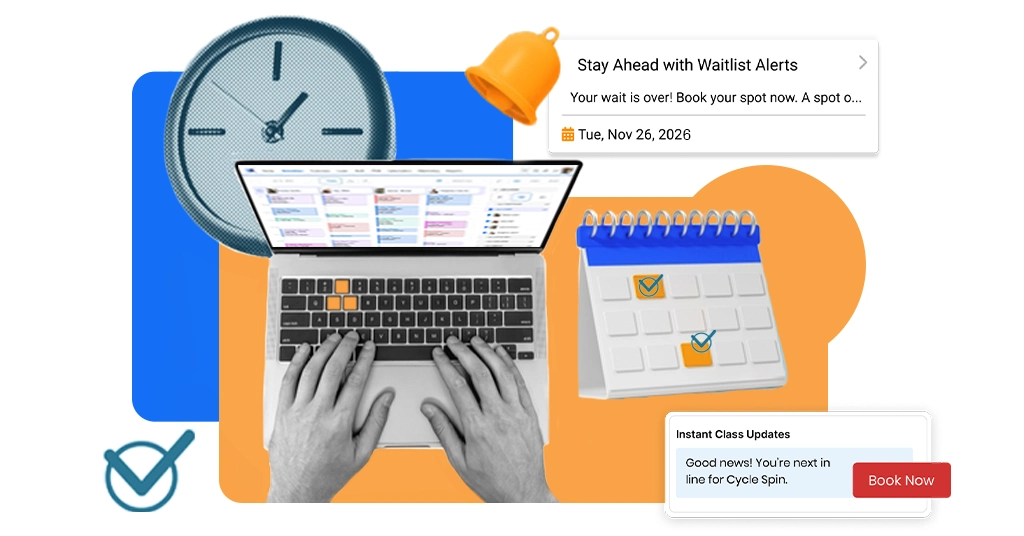
Automation helps by confirming bookings immediately, sending reminders at the right time, managing waitlists without manual chasing, and filling last-minute openings faster.
One fitness industry guide aimed at operators makes this exact point: online booking systems can manage sign-ups, cancellations, and even waitlists automatically, improving both staff efficiency and client experience.
The “failed payments are quietly draining revenue” problem
This is one of the least glamorous issues in a gym, which is probably why it stays unresolved longer than it should.
A card expires. A bank blocks a charge. A recurring payment fails. The member keeps attending for a few days because nobody wants an awkward desk moment. Then the account gets murky. Then the staff is chasing money by hand.
Good billing automation handles this before it turns messy. It retries intelligently, prompts the member to update payment details, and keeps everyone clear on account status. That is not only about collections. It is about keeping the business clean.
The “we didn’t know they were slipping away” problem
Most members do not leave with a speech.
They just become less regular. One missed week turns into two. The habit loosens. Life gets noisy. The gym stops feeling central. By the time someone formally cancels, the real exit has happened earlier.
Automation helps because it notices the silence.
If a usually active member has not checked in, the system can nudge them. If they still do not come back, it can prompt staff to step in with a real conversation. That does not save every member, but it gives you a chance to act while the relationship is still recoverable.
The “my team is good, but they are buried in repeat admin” problem
This is the quieter cost.
Your staff is not lazy. They are overloaded. They are answering routine questions, confirming sessions, fixing avoidable booking confusion, following up on unpaid memberships, and repeating the same operational tasks all day long.
Automation clears that noise.
And when it does, the team feels better too. Not just faster. Better. Less scattered. Less reactive. More able to coach, sell, and support with their full attention.
The automation workflows every gym should set up first
If you try to automate everything at once, you will create a new problem: complexity.
The better move is to start with the workflows that create the biggest operational relief early.
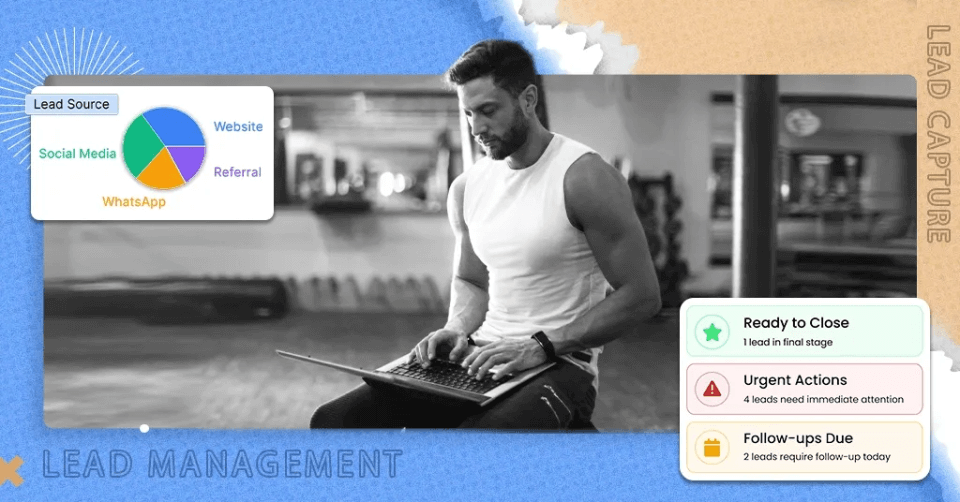
Start with lead capture and first response
This is usually the first fix because it protects growth immediately.
When a new lead fills out a form or books a consultation or clicks into a trial offer, the system should respond right away. A simple “thanks” is not enough. It should confirm what happens next and make the next step easy.
That might mean a booking link for an intro session. It might mean a text confirming that a team member will follow up. It might mean a short welcome email with pricing direction and key FAQs. The point is to reduce drift.
This matters because speed and clarity both shape conversion. Fitness buyers are often comparing options in the same short window. If your process feels slow or vague, they will keep moving.
Then automate new member onboarding
A member’s first week is not admin. It is retention.
If the first few days feel confusing, people disengage early. They are more likely to delay their first visit, miss the obvious next steps, or feel less connected before the routine has even formed.
A strong onboarding workflow should feel like quiet guidance. Welcome message. Waiver completion. App access. First booking prompt. Maybe a “here’s how to get started” message written like a real human, not a terms-and-conditions robot.
Then comes the second layer: early accountability.
If a new member signs up and does not check in during the first week, someone should know. That can begin with automation, then shift to a personal touch if needed. The software starts the process. Your team adds the warmth.
Automate booking, reminders, and waitlists together
These features work best as one system, not as separate bits.
A booking workflow should confirm the reservation, send reminders at sensible times, handle cancellations cleanly, and move waitlisted members in without staff playing traffic controller all day.
Reminders are especially important here. SMS is often the best channel for time-sensitive gym communication because it gets seen fast. Twilio reports a 98% open rate for SMS and says 90% of text messages are read within three minutes. For gyms, that makes texting especially useful for same-day class reminders, payment prompts, and schedule changes.
Reminder: evidence from other appointment-based settings is useful here too, even if gyms are not clinics. A systematic review found that reminders produced a weighted mean relative reduction in non-attendance equal to 34% of the baseline no-show rate, though the same review also notes that automated reminders can be less effective than manual phone calls in some contexts. In other words, reminders matter, but message timings and follow-ups still matter too.
That is a good lesson for fitness businesses. Use automation to reduce forgetfulness. Use people to deepen accountability.
Automate recurring billing and failed-payment recovery
This is the workflow that often pays for itself fastest.
Membership renewals should happen automatically. Payment confirmations should go out automatically. If a payment fails, the member should get a clear, calm message with a simple way to fix it. Not a vague “please contact reception,” but something actionable.
The system should also show staff what is happening without forcing them to dig. Is the account overdue? Was there a retry? Has the member updated the card? Can they still book classes? Everyone should be working from the same truth.
Too many gyms still handle this through memory, sticky notes, or awkward desk conversations. That is not a billing strategy. That is fatigue with a logo on it.
Automate inactivity alerts and re-engagement
Retention does not only live in coaching quality or community events. It also lives in timing.
When someone stops showing up, the best moment to reach them is not three months later with a generic “we miss you.” It is much earlier, when the habit can still be recovered.
That is why inactivity automation matters. Set a threshold that makes sense for your model. Maybe seven days for high-frequency studios. Maybe fourteen for general gyms. Maybe based on the member’s usual visit pattern, which is even better.
The first message should be light. Helpful. Easy to act on. If they still do not return, then it becomes a staff cue, not just another automated nudge.
Automate internal reporting and daily visibility
Owners often think of reporting as a “nice dashboard feature.” It is more practical than that.
The right daily summaries help you notice what deserves attention before it becomes a bigger issue. A dip in attendance. A spike in failed payments. A fully booked class with rising no-shows. Leads are coming in, but not converting. Packages about to expire. Members are drifting into low activity.
Without that visibility, you are always catching up. With it, you can run the business with more intent.
How to make automation feel personal, not robotic
This is where many gyms hesitate, and fairly so.
Nobody wants members to feel like they are being managed by a vending machine.
The good news is that automation only feels robotic when it is lazy.
It feels robotic when every message sounds the same. When the timing is off. When the system sends a cheerful promotion to someone whose payment just failed. When a member gets five reminders for something they already handled. When the tone sounds like software, not like your gym.
Done well, automation should feel like thoughtful consistency.
Use names naturally. Reference the class booked, not “your activity.” Keep messages short when the action is simple. Use email when the message needs context. Use SMS when speed matters. Leave room for human follow-up when the moment deserves it.
And do not automate everything just because you can.
For example, a billing reminder works beautifully as automation. A milestone message can too. A first no-show follow-up, yes. But a member who has frozen twice seems disengaged and used to be one of your most regular people? That probably deserves a real call or a real note from someone they know.
The job of automation is not to imitate care.
It is to support care at scale.
A practical setup plan for gym owners who do not want a giant tech project
This is where most good intentions get stuck. The owner agrees the gym needs better systems, then imagines a painful migration, staff confusion, weeks of setup, and a half-finished project that drags on forever.
It does not have to look like that.
First, clean up the journey before the software
Do this on paper before you do it in a dashboard.
Map the path of a lead. Map the first week of a new member. Map class booking. Map failed payments. Map what happens when someone goes inactive. If the journey is unclear in your head, the automation will be messy too.
You are not writing a novel here. You are just answering basic questions.
- What should happen first?
- What should happen automatically?
- When should staff step in?
- What message should the member receive?
- What counts as a problem worth flagging?
That clarity matters more than fancy automation logic.
Next, build only the essentials
The smartest first phase is usually this: lead reply, onboarding, booking reminders, failed-payment recovery, and inactivity nudges.
That alone will solve a surprising amount of daily friction.
Do not start with 28 segmented campaigns, birthday offers, referral ladders, and advanced upsell logic unless the basics are already stable. Complexity is seductive. Reliability is better.
Then train your team on the “why,” not just the clicks
Staff need to know more than where the buttons are.
They need to know what the system is trying to prevent. Why lead speed matters. Why is the billing flow being handled differently? Why a member might already have received a message before they arrive at the desk. Why an inactivity flag is not just data, but a cue to protect retention.
When people understand the reason behind the process, adoption gets easier.
Review the first month like an operator
After launch, look at real outcomes.
- Are leads booking faster?
- Are reminders reducing empty spots?
- Are failed payments resolving sooner?
- Are messages being opened?
- Are members complaining about too many notifications?
- Are staff still doing work that the software should be handling?
This is the part too many gyms skip. Automation is not “set it and forget it.” It is “set it, watch it, tune it.”
That is how it becomes useful instead of noisy.
What to look for in gym automation software
Not every platform is built for the same kind of operator. A small boutique studio, a general membership gym, a PT-led facility, and a multi-location fitness business may all need different depths in different areas.
Still, there are a few things almost every serious operator should look for.
- First, the system should connect leads, members, booking, billing, communication, and reporting in one real flow. If you still need three tools and a spreadsheet to understand one member’s journey, that is not operational clarity.
- Second, messaging should be trigger-based and flexible. You should be able to send reminders, billing notices, onboarding messages, and inactivity nudges based on actual behavior, not just manual blasts.
- Third, scheduling needs to be strong. That means class booking, appointments, waitlists, cancellations, and capacity rules that actually match how your gym runs.
- Fourth, billing needs to be reliable and visible. Recurring charges, package deductions, payment retries, overdue status, and account updates should all be easy to understand for both staff and members.
- Fifth, the system should be easy to use in a busy real-world environment. A platform can look polished in a demo and still feel clumsy at the front desk. Fast matters. Clear matters. Mobile matters.
- Sixth, the reporting should answer practical questions, not only impress you with charts. Which classes are underperforming? Which revenue is at risk? Which leads are not moving? Which members are fading? Which coaches are full? Which offers are working?
The best software not only collects information. It makes decisions easier.
Common automation mistakes that create more friction than they solve
There are a few traps that catch operators again and again.
Over-automation
Just because the system can send five messages does not mean it should. Members do not need a digital parade every time they blink. Keep the communication useful. Respect their attention.
Bad timing
A reminder that arrives too late is pointless. A payment alert that lands at midnight feels careless. A win-back message that goes out two days after someone joined feels absurd. Timing shapes trust more than many businesses realize.
Writing bland, lifeless messages
People can feel the difference between a message that sounds like a real business and one that sounds like an unplugged chatbot. Keep the tone clean, human, and relevant. You do not need jokes. You need clarity.
Automation to replace management
Software is a support system, not leadership. If the offer is unclear, the schedules are chaotic, and the staff process is inconsistent, automation will not fix the core problem. It will only distribute it faster.
Connect automation with member experience
This is the big one. Automation should make the gym feel easier to deal with, easier to join. Easier to book. Easier to understand. Easier to return to after a rough patch. If your setup does not do that, then it is not really serving operations. It is just sending messages.
What kind of results should a gym expect?
The honest answer is this: automation does not transform a weak operation into a great one overnight.
What it does is make a decent operation more consistent, and a good operation much harder to break.
You should expect cleaner lead handling, faster first responses, fewer missed messages, stronger booking flow, quicker payment recovery, better visibility, and more timely retention action.
You may also see fewer no-shows when reminders are used well. The research on appointment reminders is not perfectly uniform, but the broader direction is clear enough to be useful: reminders can reduce non-attendance, and they work best when they are relevant and timed properly.
You should also expect SMS to outperform slower channels for urgent actions. When a message has to be seen quickly, texting is hard to beat because of the way people actually use their phones.
And perhaps most importantly, you should expect the gym to feel less dependent on memory. That is not a small thing.
When the business no longer depends on who remembered to send what, who noticed which account issue, or who happened to be at the desk when something went wrong, the whole operation gets steadier. You get fewer loose ends. Staff get fewer avoidable interruptions. Members get a more reliable experience.
It is not glamorous. It is better than glamorous. It works.
Final thoughts
A lot of owners start looking at automation because they want to save time.
That is fair. They usually do.
But after the systems settle in, the real value often lands somewhere deeper. The gym feels easier to trust. Staff stop carrying so much invisible admin in their heads. Members get more consistent communication. Revenue leaks less. Follow-up gets tighter. Retention gets a fairer shot.
The business starts feeling like it belongs to a grown-up system instead of a daily scramble.
That is the real appeal. Not a gym with less humanity. A gym with less chaos. And for most operators, that is the upgrade they were actually looking for all along.
Ready to run a smarter gym, not a busier one?
If your gym still depends on manual follow-ups, scattered tools, and daily firefighting, you are not alone. But you also do not have to stay there.
The right gym automation tools bring everything together: your memberships, bookings, billing, communication, and reporting into one system that actually works in real time.
- Instead of chasing tasks, you start running a process
- Instead of fixing problems late, you prevent them early
- Instead of guessing, you operate with clarity
That is where platforms like GymRoute stand out. Built for modern fitness businesses, GymRoute helps you:
- Automate lead follow-ups and onboarding
- Manage bookings, waitlists, and schedules seamlessly
- Handle recurring billing and failed payments without stress
- Send smart, timely messages that keep members engaged
- Run multi-location operations from one centralized system
It is not about adding more software. It is about finally having a system that connects everything.
Explore the best gym automation software with GymRoute demo and see how your gym can run smoother, grow faster, and feel easier to manage, every single day.
FAQs
What is gym automation in simple words?
Gym automation means using software to handle repeat tasks automatically instead of relying on staff to do each one by hand. That can include replying to new leads, sending class reminders, processing recurring payments, filling waitlists, flagging inactive members, and sending daily reports.
Is gym automation only for large gyms?
No. Smaller gyms often feel the benefit even faster because they usually have leaner teams and less room for admin overload. A small gym with strong automation can feel more organized than a much larger gym still running on manual follow-up and scattered tools.
What should a gym automate first?
Start with the areas that create the most drag: lead reply, new member onboarding, booking reminders, failed-payment recovery, and inactivity alerts. Those five workflows usually deliver the fastest operational relief and protect both revenue and retention.
Will automation make my gym feel less personal?
Not if it is set up properly. Good automation handles routine tasks so your staff can spend more time where people matter most. It should support human services, not replace them. The moment a situation needs empathy, judgment, or real conversation, the system should help staff step in, not hide behind another message.
Are automated reminders actually worth it?
Usually, yes, especially for classes, consultations, and appointments where people are likely to forget or get distracted. Evidence from appointment-based settings shows that reminders can reduce non-attendance, although timing and follow-up style still matter.
Should gyms use SMS or email for automation?
Both, but for different jobs. SMS is usually better for urgent, time-sensitive actions because texts get seen quickly. Email is better for longer explanations, onboarding details, policy information, and messages that need more space.
How does gym automation help revenue?
It helps revenue by following up with leads faster, filling more bookable spots, recovering failed payments sooner, and catching disengaged members before they disappear completely. In other words, it protects money you are already close to earning, not just money from future marketing campaigns.
How long does it take to set up gym automation?
That depends on how clean your current process is. If your member journey is already clear, the basics can be set up fairly quickly. If your offers, rules, and workflows are inconsistent, the real work starts before the software does. The smoother your internal process, the smoother the automation setup.
What should I look for in gym automation software?
Look for a system that connects CRM, bookings, billing, messaging, and reporting in one place. You want flexible automation rules, solid class and appointment scheduling, reliable billing, easy-to-read dashboards, and a member experience that feels simple on mobile.
Can automation help with member retention?
Yes, especially when it is used to spot early disengagement. If the system can flag members who stop checking in, nudge them at the right time, and cue staff when a personal follow-up is needed, you have a much better chance of recovering the habit before the member quietly slips away.