- The #1 fitness trend for 2026 is wearable technology (ACSM, 20th annual survey of 2,000 professionals). It has now held the top spot nine times, more than any trend in the survey’s history.
- Fitness programs for older adults rank #2, and adults 65+ now visit gyms more often than any other age group. The 73 million American baby boomers will all be over 65 by 2030.
- Exercise for weight management hit #3, its highest ranking ever, driven directly by GLP-1 medication adoption. Roughly 12% of US adults have used a GLP-1 drug.
- Adult recreation and sport clubs entered the top 10 for the first time ever at #9, driven by pickleball. US pickleball participation hit 24.3 million players in 2025, up 479% in five years.
- HYROX will reach roughly 1.5 million participants and $270 million in revenue in 2026, across 121 events in 34 countries, with about 16,000 affiliated gyms. This is the single largest business opportunity most 2026 trend articles ignore.
- HYROX will reach roughly 1.5 million participants and $270 million in revenue in 2026, across 121 events in 34 countries, with about 16,000 affiliated gyms. This is the single largest business opportunity most 2026 trend articles ignore.
- The pattern across all of it: the money in 2026 is in specificity. Businesses built around a defined population with a defined problem (menopause, GLP-1 muscle preservation, fall prevention, race prep) outprice and outretain businesses selling generic access.
- 24 business ideas below, each mapped to the trend that creates it, with revenue model, capital level, and startup difficulty.
Fitness in 2026 is not one market. It has split into two, and the businesses making money are the ones that picked a side.
On one side is medical specialization: GLP-1 support, longevity programs, menopause-specific training, fall prevention. High trust, high price, low churn. On the other is experience and community: HYROX prep, run clubs, pickleball leagues, challenge-based programs. Low capital, viral acquisition, driven by belonging rather than results.
The businesses struggling in the middle are the ones still selling undifferentiated access to equipment.
This guide breaks down the eight macro trends actually shaping 2026, each backed by cited data, and the 24 business ideas those trends create. Every idea includes a revenue model, a realistic capital level, and an honest read on difficulty. Where a number is not verifiable, this guide says so rather than inventing one.
The 8 fitness business trends defining 2026
These are not predictions. Each one is a documented shift with data behind it.
Trend 1: Wearables became the coaching layer, not the tracking layer
Wearable technology is the #1 fitness trend for 2026, per the American College of Sports Medicine’s 20th annual Worldwide Fitness Trends survey of 2,000 clinicians, researchers, and exercise professionals. It has held the top spot for three consecutive years and nine times overall, more than any trend in the survey’s history.
What changed is not adoption. Nearly half of US adults already own a tracker or smartwatch. What changed is the application. Devices now capture heart rhythm, blood pressure, blood glucose, skin temperature, and fall detection. As ACSM lead author Cayla McAvoy put it, the question is no longer whether people will use wearables, but how to use them to actually support behavior change.
The business implication: wearable data is now an input to coaching decisions, not a vanity metric. That lets one coach manage a much larger roster while keeping programming genuinely personalized, which breaks the hourly ceiling that has always capped personal training income. Delivering it at scale requires a member app that sits between the device data and the coaching relationship.
Trend 2: The silver economy is the highest-value demographic in fitness
Fitness programs for older adults rank #2 for 2026. The trend has appeared in ACSM’s top 10 nearly every year since the survey began, and in 2026, it ranked highest among respondents 65 and over, gym owners, health coaches, and group exercise instructors.
The numbers behind it are not subtle. 73 million American baby boomers will all be over 65 by 2030. And per the IHRSA US Health & Fitness Consumer Report, adults 65 and older now visit gyms and studios more often than any other age group.
The business implication: this demographic has more disposable income, higher visit frequency, lower churn, and a clearer reason to keep paying than any other segment. Most gyms still market almost exclusively to people under 40.
Trend 3: GLP-1 medications created a strength training market that did not exist
Exercise for weight management ranks #3 for 2026, its highest position ever, up from #4 in 2025 and #8 in 2023. ACSM renamed the trend from “weight loss” to “weight management” to reflect the broader picture.
The driver is pharmacological. Roughly 12% of US adults have used a GLP-1 drug, per RAND research. Obesity affects 42.4% of US adults, and about 49% actively try to manage their weight. The clinical reality is that GLP-1 medications cause muscle loss alongside fat loss, and structured resistance training is what preserves lean mass, metabolic health, and physical function. Those outcomes are not consistently achieved with medication alone.
The business implication: millions of people now have a medical reason to strength train who previously had none, and they are actively looking for guidance. This is the clearest new demand signal in the industry.
Trend 4: Social sport entered the mainstream, and pickleball led it
Adult recreation and sport clubs made their first-ever appearance in ACSM’s top 20 in 2026, landing at #9. It ranked especially high among clinical exercise physiologists and medical professionals, which signals recognition well beyond the fitness bubble.
The data underneath it is remarkable: US pickleball participation reached 24.3 million players in 2025, up 479% from roughly 4.2 million in 2020, per SFIA’s Topline Participation Report. Padel, still early in the US, counted about 1.07 million American players in 2025 and is growing fast from a large international base.
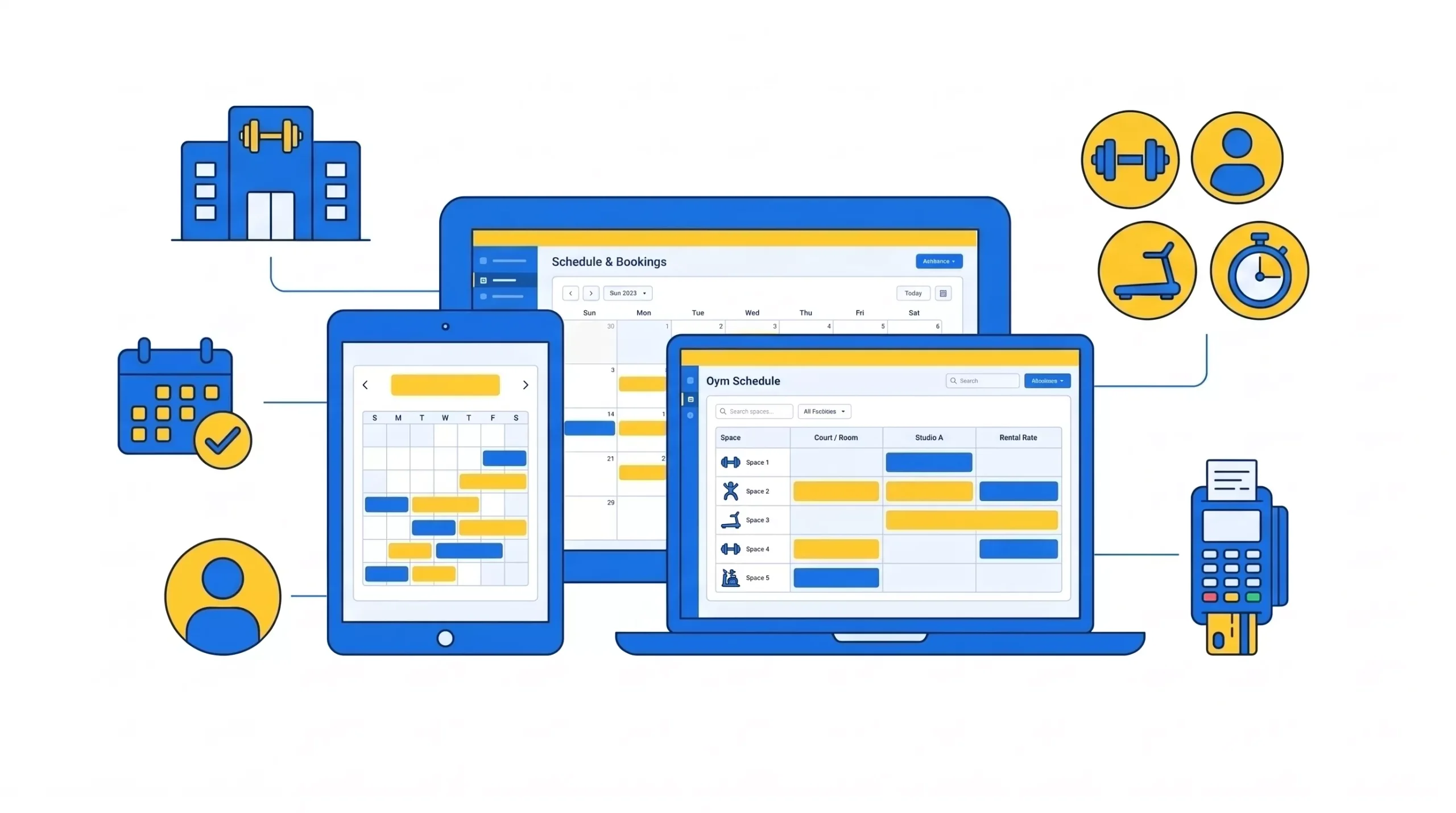
The business implication: a large population wants to move socially and competitively without a traditional gym. These formats feel less intimidating than a weight room and more engaging than solo cardio, which is exactly why adherence is higher. Operationally, they run on court booking and facility rental rather than class timetables, which is a different scheduling problem than most gyms are set up for.
Trend 5: Hybrid racing became a sport, and gyms are the training infrastructure
This is the trend most 2026 articles mention in passing and fail to cite. The numbers are extraordinary.
HYROX expects roughly 1.5 million participants in 2026, across 121 events in 34 countries, with projected revenue around $270 million, up from about $130 million in 2025. It started with 650 competitors at a single Hamburg race in 2017.
The part that matters to gym owners: HYROX runs roughly 16,000 affiliated gyms, and the affiliate fee is roughly $1,500 per year, materially cheaper than traditional functional fitness licensing. Two-Brain Business documented one gym adding $100,000 in annual revenue from adding just two HYROX classes per week, and another owner reported that 42% of his leads were specifically looking for HYROX training.
The business implication: an existing gym can attach to a global sport for about $1,500 a year and convert its existing floor space into race-prep programming that members will pay a premium for. Few opportunities in this industry have that risk-to-return profile.
Trend 6: Mental health and mind-body moved to the center
Balance, flow, and core strength rank #5 for 2026, rebounding after a pandemic-era dip in group participation, and exercise for mental health ranks in the top tier alongside it. ACSM’s own framing is that these formats now bridge movement quality with mental well-being rather than sitting in a separate wellness category.
The business implication: people increasingly train for mood, stress, and cognitive health rather than aesthetics. That reframing changes who buys, what they buy, and how you market it.
Trend 7: Mobile apps became the primary access point, not a supplement
Mobile exercise apps rank #4 for 2026, and data-driven technology ranks #8. For a large share of consumers, the app is now the front door to fitness, either as a supplement to in-person training or as the primary entry point into exercise.
The business implication: a fitness business without a credible digital layer is invisible to a meaningful part of its own market. This is also why the hybrid model has stopped being a differentiator and become a baseline expectation, and why online booking and scheduling that works properly on a phone is now table stakes rather than an upgrade.
Trend 8: Functional fitness and rehab crossover keep compounding
Functional fitness training ranks #10 in 2026, up from #12 in 2025, and has appeared in ACSM’s top 20 every year since 2007. Alongside it, exercise in physical rehabilitation and adaptive training and exercise for chronic disease management both rank in the top tier.
The business implication: the boundary between fitness and healthcare is dissolving in both directions. Gyms are becoming referral destinations for clinicians, and clinical framing commands higher prices than aesthetic framing.
The 24 best fitness business ideas for 2026
Each idea below maps to at least one trend above. Capital is a rough band: Low (under $10k), Medium ($10k to $100k), High ($100k+). Difficulty reflects operational complexity and time to profitability, not effort.
Category 1: Medical and specialized (highest margin, highest trust)
1. GLP-1 muscle preservation programs
Trend: #3 Exercise for weight management. Capital: Low. Difficulty: Medium.
Structured resistance training for people on GLP-1 medications, positioned around preserving lean mass and metabolic health during rapid weight loss. This is the single clearest new demand signal in fitness, because the medication creates the need and the person already knows they have a problem.
Revenue model: 12-week cohort programs at premium pricing, or recurring membership with body composition tracking as a paid add-on.
Client acquisition: Referral partnerships with weight loss clinics, telehealth GLP-1 prescribers, and primary care. These clinicians need somewhere to send patients, but mostly have nowhere. Track those referrals as a distinct source in your lead management so you can see which clinic partnerships actually convert.
Honest read: you need genuine competence in training deconditioned clients and the discipline not to make medical claims. Get clear on your scope of practice before you market this.
The referral relationship is the whole business. Clinics send patients to programs that report back, not programs that go quiet. If you can show a prescriber that their patient attended nine of twelve sessions, you get the next ten referrals. That means tracking attendance and progress against the referral source from day one rather than retrofitting it later.
2. Longevity and healthspan programs for adults 50+
Trend: #2 Fitness programs for older adults. Capital: Low to Medium. Difficulty: Medium.
Strength, balance, and coordination programming aimed at independence rather than aesthetics. Given that adults 65+ now visit gyms more than any other age group, and 73 million boomers will be 65 by 2030, this is the largest underserved demographic in the industry.
Revenue model: stable recurring memberships or clinical-style blocks such as a 12-week balance program.
Client acquisition: referral partnerships with physical therapists and physicians, plus marketing to the adult children of seniors, who are frequently the ones searching.
Honest read: this segment has the lowest churn in fitness because the stakes feel higher. It also demands patience, higher coaching oversight, and slower progression than most trainers are used to.
3. Fall prevention clinics
Trend: #2 Older adults, #8 Rehab crossover. Capital: Low. Difficulty: Medium.
A narrower, sharper version of the above. Fall prevention is a specific, medically legible problem with a specific protocol, which makes it easier to get clinical referrals and easier to price.
Revenue model: program blocks, often partially reimbursable depending on jurisdiction and referral structure.
Honest read: verify what is reimbursable in your market before building a model around it. This varies enormously.
4. Menopause-focused strength and wellness programs
Trend: #3 Weight management, #6 Mental health. Capital: Low. Difficulty: Medium.
Programming built for women in perimenopause and menopause, addressing strength loss, body composition change, sleep disruption, and energy management. The audience is underserved, highly motivated, and actively searching for solutions rather than motivation.
Revenue model: cohort programs (a “12-week reset” format) or small-group memberships.
Client acquisition: education-led content marketing. This audience responds to being understood, not sold to. Use digital intake forms that ask symptom-aware questions so programming starts from real information rather than a generic PAR-Q.
Honest read: credibility is everything here, and it is unforgiving. Partner with a clinician or get specific education before launching.
5. Preventive health and metabolic fitness programs
Trend: #3 Weight management, #8 Chronic disease. Capital: Low to Medium. Difficulty: Medium.
Programs targeting insulin resistance, cardiovascular risk, and weight regain for people concerned about family history or early markers. Structured strength plus aerobic work, with habit frameworks, delivered on longer timelines than drop-in fitness.
Revenue model: membership plus high-margin add-ons: nutrition coaching, body composition analysis, metabolic tracking reviews.
Client acquisition: collaboration with local medical practices and weight loss clinics.
6. Post-rehab and prehab bridge programs
Trend: #8 Rehab crossover. Capital: Low to Medium. Difficulty: Medium to High.
The gap between “discharged from physical therapy” and “ready for a normal gym” is real, poorly served, and full of people who are motivated and scared. Prehab, preparing clients for scheduled surgery, is the same opportunity in reverse.
Revenue model: program blocks with clinician handoff.
Honest read: requires genuine relationships with PTs and orthopedic practices, plus rigorous scope-of-practice clarity. Slower to build than most ideas here, but very defensible once established.
7. Youth athletic development
Trend: #8 Functional fitness. Capital: Medium. Difficulty: Medium.
Developmentally appropriate training emphasizing movement quality, progressive skill development, and injury prevention, without early specialization. Note that ACSM’s youth-specific trend dropped in the 2026 rankings, so this is a market-driven opportunity rather than a trend-driven one, which means demand is local and must be validated locally.
Revenue model: seasonal program blocks and family memberships.
Honest read: parent-funded, which means the buyer is not the user. Retention depends on parents seeing progress, not kids having fun, and those are different products. The closest proven analog is the martial arts model, where rank progression gives parents visible proof of value, which is worth studying if you build this. See how martial arts software structure family plans and progression tracking.
Category 2: Community and experience (lowest capital, viral acquisition)
8. HYROX affiliate training programs
Trend: #5 Hybrid racing. Capital: Low (roughly $1,500/year affiliation, if you already have space). Difficulty: Low.
If you own a gym with floor space, this is arguably the highest ROI opportunity on this entire list. HYROX will reach ~1.5 million participants across 121 events in 34 countries in 2026, with ~16,000 affiliated gyms. The affiliate fee is roughly $1,500/year and is materially lower than traditional functional fitness licensing.
The documented returns are unusual: Two-Brain Business reported one gym adding $100,000 in annual revenue from two HYROX classes per week, and another owner finding that 42% of his leads were specifically seeking HYROX training, converting 31 memberships in four months.
Revenue model: premium race-prep programming as a membership tier or class pack on top of existing dues.
Client acquisition: effectively free. Athletes search for local HYROX training, and the affiliate directory does the work.
Honest read: you need lane space, sleds, and conditioning capacity. Small-footprint studios will struggle to run true simulations. And “if you build it, they will come” does not apply; you still need a program and a plan to sell it.
Thinking about it? The operational lift is smaller than most owners expect. Race-prep is a membership tier on top of dues you already collect, sold to members you already have. If you want to see what that looks like configured for your actual schedule, book a demo, and we will build the tier structure with you.
9. Independent hybrid racing and fitness competitions
Trend: #5 Hybrid racing, #4 Social sport. Capital: Low to Medium. Difficulty: Medium.
HYROX proved the format. The market for local, lower-stakes competitive fitness events is wide open, and the psychology transfers: standardized format, comparable times, divisions that let everyone compete at their level.
Revenue model: entry fees, sponsorship, merchandise.
Honest read: events are operationally hard and cash-flow lumpy. Start with one event before you build a series.
10. Pickleball and padel facilities or programming
Trend: #4 Social sport (ACSM #9, new to top 10). Capital: High for facilities, Low for programming. Difficulty: Medium.
24.3 million US pickleball players in 2025, up 479% in five years. Padel has ~1.07 million US players and is growing from a large international base. ACSM specifically credits pickleball for putting adult recreation clubs in the top 10 for the first time.
Revenue model: court rental, league fees, coaching, memberships. Leagues are the recurring-revenue engine; open play alone is not.
Honest read: dedicated facilities are capital-intensive and land-constrained. The lower-risk play is programming and leagues on existing or partner courts. Also worth asking honestly whether your local market is saturated already, since a lot of capital chased this in 2024 and 2025.
11. Run clubs and community-first fitness brands
Trend: #4 Social sport. Capital: Low. Difficulty: Low to Medium.
People are seeking “third places” outside work and home, and fitness events have become modern gathering spaces. These start lean and grow through word of mouth.
Revenue model: tiered community memberships for perks, paid event tickets, branded merchandise, brand partnerships.
Client acquisition: bring-a-friend loops and user-generated content. Every event is a live marketing asset.
Honest read: monetization is the hard part. Many run clubs have enormous attendance and near-zero revenue. Decide on your model before you scale the community, because retrofitting monetization onto a free community is painful.
12. Gamified challenge-based programs
Trend: #4 Social sport, #7 Apps. Capital: Low. Difficulty: Low.
Sell participation rather than workouts: goals, streaks, leaderboards, social accountability. The training can be simple. The structure and feedback loop are the product.
Revenue model: fixed-length challenge entry fees (a 6-week challenge at $49 to $99 is a common structure), or recurring subscriptions for ongoing leaderboard access.
Client acquisition: built-in social sharing, where participants recruit friends. A loyalty and points system does most of the mechanical work here, since streaks and redeemable rewards are exactly what the model runs on.
Honest read: this works best as an add-on to an existing member base. Standalone, the acquisition cost of a challenge business is higher than it looks.
13. Fitness retreats and immersive experiences
Trend: #6 Mental health, #4 Community. Capital: Medium. Difficulty: Medium to High.
Multi-day formats combining training, recovery, education, and social connection, often in destination locations. Wellness travel continues growing faster than traditional tourism, and consumers pay premium prices for transformation-focused experiences.
Revenue model: high-margin, low-frequency, strong cash flow without year-round overhead.
Client acquisition: email your existing member base with genuine scarcity (“4 spots left”).
Honest read: the margins are real but so is the operational risk. One bad venue contract or a half-full retreat can erase a year of profit. Start by co-hosting someone else’s.
14. Corporate and workplace wellness
Trend: #6 Mental health. Capital: Low. Difficulty: Medium.
Sell movement and stress-management programs to companies rather than individuals. Burnout and disengagement are now board-level business risks showing up in turnover and sick days.
Revenue model: flat monthly or quarterly fee per employee with access, like a software subscription. One client equals many users.
Client acquisition: outreach to HR and operations leaders, offering a pilot for a single team. Run the outreach and pilot follow-up through a real pipeline, because B2B deals die from inconsistent follow-up more than from bad offers.
Honest read: B2B sales cycles are long, and procurement will grind you. But one contract can equal 100 individual memberships in revenue with a fraction of the churn.
Category 3: Facility and format businesses (higher capital, defensible)
15. Recovery and wellness studios
Trend: #6 Mental health. Capital: High. Difficulty: Medium.
Standalone spaces for downregulation and nervous system health: cold plunge, contrast therapy, infrared sauna, guided mobility, breathwork, assisted stretching. The audience is broader than a gym’s: gym-goers, endurance athletes, stressed professionals, and older adults focused on longevity.
Revenue model: credit-based session packs or unlimited memberships, typically priced above standard gym dues.
Client acquisition: partner with local high-intensity gyms and run clubs to offer recovery days as a lead magnet.
Tech angle: automated booking plus access control let you run sessions with minimal or no staff, which is what makes the model work financially. Members book a specific station, a sauna or a plunge and enter without a front desk. Add a waitlist so unused station slots refill automatically, since utilization per station per hour is the entire economics of this model.
Honest read: high build-out cost and real utilities and maintenance overhead. Cold plunges are not cheap to run. Model your revenue per station per hour before signing a lease.
The margin lives in the staffing. A recovery studio that needs a front desk during every open hour rarely clears its overhead. One where members book a station and badge themselves in does. That is the difference access control tied to membership status makes, and it is worth modeling before you commit to a lease.
16. Reformer-led Pilates studios
Trend: #5 Balance/flow/core (ACSM #5). Capital: High. Difficulty: Medium.
Pilates is among the fastest-growing disciplines globally, driven by demand for low-impact, strength-based training supporting longevity, posture, and injury prevention. Its appeal spans younger professionals through older adults and post-rehab clients.
Revenue model: premium class packs or memberships, justified by small class sizes and specialized equipment.
Client acquisition: local ads on “low impact, high results” with an intro offer like 3 classes for $50.
Tech angle: waitlist management with automatic spot-available notifications is not optional here. When a studio only has ten reformers, every unfilled spot is unrecoverable revenue.
Honest read: reformer equipment is a serious capital commitment, instructor quality is make-or-break for retention, and many markets are now genuinely crowded. Validate local demand before you buy ten reformers.
17. Strength-focused training studios
Trend: #3 Weight management, #2 Older adults, #8 Functional. Capital: Medium to High. Difficulty: Low to Medium.
The unglamorous one that keeps winning. Strength training underpins GLP-1 muscle preservation, healthy aging, metabolic health, and functional capacity. Many adults still skip it out of intimidation or uncertainty, which is precisely the opening.
Revenue model: memberships plus semi-private coaching, which is the highest-margin format in fitness. Retail (supplements, apparel) is a natural secondary line if your POS charges the same member record as dues, so you are not reconciling two systems.
Honest read: the format is not novel, so your differentiation has to come from the population you serve, not the equipment you buy.
18. 24/7 unstaffed gyms
Trend: #7 Apps, #1 Wearables. Capital: High. Difficulty: Medium.
Access control plus app-based membership make low-staff operation viable. The model trades member experience for margin and works best in the right demographic and location.
Revenue model: high-volume, low-price recurring memberships.
Tech angle: this model is entirely dependent on native access control tied to membership status. If the door does not know who has paid, the model collapses.
Honest read: you are competing with budget chains that have enormous scale advantages. Win on location convenience, not price.
19. Boutique studios with a single defined identity
Trend: #4 Community, #6 Mental health. Capital: Medium to High. Difficulty: Medium.
Boxing, cycling, barre, dance, and similar. The winning ones sell an identity, not a workout.
Honest read: this is the most saturated category on this list and the least defensible. Only enter with a genuine point of view and a community you already have.
20. Women-only gyms and studios
Trend: #4 Community, #3 Weight management. Capital: Medium to High. Difficulty: Medium.
A durable model that consistently underperforms relative to demand in many markets, particularly when paired with menopause or strength programming.
Honest read: verify local demand rather than assuming. This works brilliantly in some markets and not at all in others, and the difference is cultural, not demographic.
21. Multi-location and franchise operations
Trend: all of them. Capital: High. Difficulty: High.
Scaling a proven concept across sites. The operational complexity is genuinely different in kind, not just degree.
Honest read: do not do this until one location is profitable, systematized, and running without you. Most failed multi-location operators scaled a business that only worked because the owner was in the building. On the software side, the question is whether you are paying for marketplace reach or flat-rate predictability, which is the core of the GymRoute vs Mindbody decision at scale.
Category 4: Tech-enabled and scalable (leverage over labor)
22. Hybrid studios with a structured digital layer
Trend: #7 Apps, #1 Wearables. Capital: Low to Medium (on top of existing operation). Difficulty: Low.
Hybrid is no longer experimental; it is baseline. Physical training plus a structured digital layer: app-based program access, on-demand replays, coach messaging, digital challenges, habit tracking. Members engaging both in person and digitally train more consistently and stay longer.
Revenue model: premium “all-access” memberships above standard gym access, plus a lower-tier digital-only subscription for remote members.
Tech angle: a branded member app is the mechanism. It houses on-demand content behind a paywall while handling bookings and renewals in one system.
Honest read: the content library is a real ongoing production cost that people consistently underestimate. Start with replays before you build a studio.
Start smaller than you think. You do not need a content studio to launch hybrid. You need a paywall and a place to put recordings. If your member app can gate on-demand content behind a premium tier, you can test whether members will pay for it using replays of classes you already teach, before spending a dollar on production.
23. Wearable-integrated coaching
Trend: #1 Wearables. Capital: Low. Difficulty: Medium.
Client wearable data actively guides training, recovery, and coaching decisions: intensity adapts to heart rate and recovery, load adjusts when sleep is poor, mobility sessions trigger when readiness drops.
Revenue model: premium coaching tiers or smart-training add-ons above standard membership.
Honest read: this is only a business if you can actually interpret the data. Reselling a dashboard is not coaching, and clients work that out fast.
24. Mobile and in-home personal training (brand-owned)
Trend: #7 Apps. Capital: Low. Difficulty: Low to Medium.
Training delivered at clients’ homes, offices, or outdoors under a single brand rather than a third-party marketplace. Appeals to high-income professionals, families, and older adults who value privacy and convenience. Hybrid work normalized in-home services.
Revenue model: premium hourly or monthly packages that price in travel time, with no facility rent.
Client acquisition: local SEO in high-income zip codes, plus partnerships with luxury residential buildings.
Tech angle: centralized scheduling and payments so the business owns the client relationship, not the individual trainer. This is the whole ballgame in this model.
Honest read: it scales through hiring a team, not through real estate, which means your constraint becomes recruiting and retaining trainers who do not poach clients.
How to choose the right fitness business for 2026
The strongest models sit where three things overlap: what you are genuinely good at, what your market actually wants, and how much complexity you can manage.
Step 1: Pick one strategic track, not three
Medical and specialized. Closest to healthcare. Longevity, GLP-1 support, menopause, metabolic health, rehab bridge. Runs on trust and expertise, commands the highest prices, attracts clients who care about outcomes over atmosphere.
Community and experience. Built around people, not systems. Run clubs, HYROX prep, pickleball leagues, challenges, events. Connection is the product; retention comes from belonging.
Tech-enabled efficiency. Software and automation to scale without adding staff or space. Hybrid coaching, challenge platforms, unstaffed facilities. One system serves many.
Most winning businesses commit to one and execute it properly. Trying to be all three is how you end up mediocre at each.
Step 2: Match the model to your capital and risk tolerance
Low capital, fast launch: HYROX affiliation, run clubs, challenges, mobile PT, corporate wellness, GLP-1 programs. Test demand quickly and grow on momentum rather than infrastructure.
Medium capital, steady revenue: strength studios, youth development, retreats, boutique concepts. Equipment and space are required, but premium pricing and predictable utilization once established.
High capital, long-term payoff: recovery studios, Pilates, pickleball facilities, 24/7 gyms, multi-location. Longer to break even, but has a higher lifetime value and stronger defensibility when executed well.
If cash flow matters now, stay lean. If you are building for durability, complexity may be worth it.
Step 3: Validate demand before you commit a dollar
Check real search demand. Look for specific local searches: “reformer Pilates,” “HYROX training,” “cold plunge,” “run club,” not vague interest in “gyms.” Vague interest is not a signal.
Test before you build. A landing page, a waitlist, and a small local ad test. If people will not raise their hand digitally, they will not show up physically.
Audit substitutes, not just competitors. Recovery studios compete with massage therapists. Social fitness competes with cafés and hobby groups. Your real competition is rarely the gym down the street.
Validate with a waitlist, not a lease. The cheapest version of any idea here is a landing page and a digital form collecting names for a program that does not exist yet. If forty people sign up for your menopause cohort before you have written it, you have a business. If four do, you have saved yourself a year.
Step 4: Pick a high-value audience, not a broad one
The most profitable fitness businesses are built around specific life stages and problems. These four audiences consistently show higher willingness to pay because they need solutions, not motivation:
GLP-1 users. Losing weight fast, worried about muscle loss and looking unhealthy. Actively seeking resistance training and structure.
Adults 50+. Focused on independence, balance, and cognitive health. They visit gyms more than any other age group and have the spending power to match. Respond to longevity framing, not “senior” framing.
Hybrid Gen Z. Less interested in traditional gyms, drawn to social fitness, challenges, and community formats. Consistency comes from connection, not discipline.
Women in perimenopause and menopause. Actively searching for strength-based, symptom-aware training. Underserved, highly engaged, open to premium education-led offers.
A note that matters: you do not need new certifications or a full rebrand to serve most of these groups. They are business opportunities built on clearer positioning and better packaging of expertise you likely already have. The goal is not to chase trends. It is serving people who are already looking and already willing to pay.
Frequently asked questions
What are the biggest fitness business trends for 2026?
Per ACSM’s 20th annual Worldwide Fitness Trends survey of 2,000 professionals, the top five for 2026 are wearable technology (#1, its third consecutive year and ninth time overall), fitness programs for older adults (#2), exercise for weight management (#3, its highest ever, driven by GLP-1 adoption), mobile exercise apps (#4), and balance, flow, and core strength (#5). Adult recreation and sport clubs entered the top 10 for the first time at #9, driven by pickleball. Beyond the survey, the largest commercial trend is hybrid racing: HYROX expects roughly 1.5 million participants and $270 million in revenue in 2026.
What is the most profitable fitness business to start in 2026?
It depends on your capital. For an existing gym owner, HYROX affiliation has the strongest documented return: roughly $1,500/year in fees, with one gym reporting adding $100,000 in annual revenue from two classes per week. For a low-capital start, GLP-1 muscle preservation programs and longevity programs for adults 50+ target the two clearest new demand signals with premium pricing and low churn. For higher capital, recovery studios and reformer Pilates command premium prices but require serious build-out. Profitability is driven more by audience specificity than by format.
Is opening a gym still a good idea in 2026?
Opening an undifferentiated gym that sells access to equipment is a difficult business because you compete with budget chains on price and boutiques on experience. Opening a gym built around a specific population with a specific problem, GLP-1 clients, adults over 50, menopause, HYROX athletes, is a much better business. The market has split into medical specialization and community experience, and the businesses struggling are in the undifferentiated middle.
What fitness business can I start with little money?
The lowest-capital models with real demand behind them: HYROX affiliation if you already have space (~$1,500/year), run clubs and community brands, gamified challenge programs, mobile and in-home personal training, corporate wellness, GLP-1 support programs, and menopause-focused cohort programs. All can launch under roughly $10,000, and most can validate demand with a landing page and a small ad test before you spend anything meaningful.
How is GLP-1 medication changing the fitness industry?
It created a strength training market that did not previously exist. Roughly 12% of US adults have used a GLP-1 drug, and because these medications cause muscle loss alongside fat loss, users need structured resistance training to preserve lean mass, metabolic health, and physical function, outcomes that medication alone does not consistently deliver. ACSM’s exercise for weight management trend hit its highest ranking ever (#3) in 2026, partly because of this. For gyms, it means millions of people now have a medical reason to train and are actively looking for guidance.
Is pickleball a good fitness business investment in 2026?
The demand data is real: 24.3 million US players in 2025, up 479% in five years, and ACSM put adult recreation and sport clubs in its top 10 for the first time, largely because of pickleball. But dedicated facilities are capital-intensive and land-constrained, and significant capital chased this space in 2024 and 2025, so some markets are now saturated. The lower-risk entry is programming and leagues on existing or partner courts, where leagues rather than open play generate the recurring revenue.
Should my gym become a HYROX affiliate?
If you have the floor space, the math is unusually favorable. Affiliation runs roughly $1,500/year, materially below traditional functional fitness licensing, and connects you to a sport reaching ~1.5 million participants across 121 events in 34 countries in 2026. Documented results include one gym adding $100,000 annually from two classes weekly, and another finding that 42% of leads were seeking HYROX training. The caveats: you need lane space, sleds, and conditioning capacity for real simulations, and affiliation alone does nothing. You need an actual program and a plan to sell it.
What is the best fitness business for older adults?
Longevity and healthspan programs focused on strength, balance, and independence rather than aesthetics. The demographics are compelling: 73 million American baby boomers will all be over 65 by 2030, and adults 65+ already visit gyms and studios more often than any other age group, per IHRSA data. ACSM ranks fitness programs for older adults #2 for 2026. This segment has the lowest churn in fitness. Fall prevention clinics are a narrower, more clinically legible version that is easier to get physician referrals for. Operationally, keep the booking experience simple and lean on automated reminders, since no-shows in this segment are usually a usability problem rather than a motivation problem.
How do I know if a fitness business idea will work in my market?
Three checks. First, search demand for the specific service, not the category: “reformer Pilates near me” or “HYROX training,” not “gyms.” Second, run a landing page and a small local ad test before spending on build-out; if people will not click, they will not walk in. Third, audit substitutes rather than competitors, since recovery studios really compete with massage therapists and social fitness really competes with cafés and hobby groups.
What software do I need to run a modern fitness business?
It depends on the model, but most of the 2026 ideas share requirements: recurring billing with failed-payment recovery, booking with waitlists, a member-facing app, and reporting. Model-specific needs matter too. Recovery studios and 24/7 gyms need access control tied to membership status to run with minimal staff. Hybrid studios need a branded app that can gate on-demand content. Event and retreat businesses need one-off ticketing and installment plans. Community businesses need event management and in-app groups. Gyms with meaningful retail need a POS that shares the member record. Pick the software after you pick the model, not before, and check what it actually costs at your real member count rather than the headline tier price.
Which fitness business has the lowest churn?
Programs for older adults and medically-framed programs consistently retain the best, because the perceived stakes are higher than for general fitness. A client training to stay independent at 72, or to preserve muscle while on a GLP-1, has a reason to keep showing up that a New Year’s resolution does not provide. Community-driven models also retain well, but through belonging rather than outcomes, which means retention is fragile if the community fractures.
The pattern is worth taking away
Across all eight trends and twenty-four ideas, one thing repeats: the money in 2026 is in specificity.
Wearables matter because they enable personalization. Older adults matter because they have a specific reason to train. GLP-1 matters because it creates a specific medical need. HYROX matters because it gives fitness a specific goal. Menopause programs, fall prevention clinics, and metabolic health programs all work for the same reason: they serve a defined person with a defined problem.
The businesses struggling in 2026 are the ones still selling generic access to generic equipment to a generic audience.
You do not need to chase all twenty-four ideas, or even three. Pick one track, match it to your capital, validate the demand before you build, and choose an audience that is already looking for what you do. Then get the operations right, because the best positioning in the world will not survive a booking system your members cannot use.
If you are building any of these models, GymRoute handles the operational layer: membership and billing, booking and scheduling, a branded member app, native access control for unstaffed and recovery models, and POS for retail, at flat pricing with unlimited members. You can see the pricing without a sales call.