Indoor climbing has transitioned from a niche hobby to a mainstream fitness destination. Thanks to rising participation, increased wellness spending, and the sport’s continued Olympic presence, the global climbing gym market was valued at about $3.3 billion in 2024 and is projected to grow to $5.67 billion by 2030. Adult climbers alone account for roughly 60 % of market share, and bouldering facilities, in particular, dominate revenue due to their broad appeal and lower infrastructure costs.
This growth reflects climbing’s unique combination of physical challenge, social interaction, and community engagement. But opening a gym that thrives long-term requires more than passion; it requires a strategic business plan that accounts for market demand, site selection, construction and operating costs, programming, pricing psychology, marketing, and scalability.
1. Market demand and growth trends
Indoor climbing’s continued expansion isn’t accidental. Urban populations increasingly seek alternative, dynamic workouts that provide strength, cardio, and problem-solving all in one. Indoor facilities fill a gap left by limited natural climbing access, especially in major metropolitan areas.
- Projected market growth: From $3.3 B in 2024 to an estimated $5.67 B by 2030 (approx. 9.3 % CAGR).
- Largest segments: Indoor climbing overall; bouldering continues to lead revenue share due to lower complexity and social appeal.
- Core users: Adults dominate participation, but youth, families, and outdoor enthusiasts increasingly engage with indoor climbing as both fitness and recreation.
Growth drivers include wellness trends, community-focused fitness experiences, and increased interest from younger demographics who prefer skill-based, social workouts over traditional gyms.
2. Choosing the right location and foot traffic strategy
Location is easily one of the biggest predictors of success. Even a well-run gym with excellent programming can struggle if placed in a low-visibility or hard-to-access area.
Why location matters?
A good location maximises visibility, accessibility, and foot traffic, all of which translate to:
- Higher trial visits and walk-ins
- Better conversion from day passes to memberships
- Stronger community engagement and lower marketing spend per member
Industry analysis underscores that high foot traffic and accessibility directly increase customer engagement by as much as 30 % compared to less visible locations.
Choosing your site
High-impact location criteria include:
- Population base: At least 100,000 within a 10-minute drive in urban markets; 50,000+ in suburbs; 20,000+ plus college enrollment in small cities.
- Demographic fit: Ages 18–44 dominate participation, with strong participation from families and students.
- Income levels: Median household income of ~$65,000+ supports premium memberships and varied revenue streams.
- Traffic and accessibility: Easy highway or transit access, strong visibility, and sufficient parking significantly increase trial use and convenience.
Analyzing competition density is also crucial. Markets with fewer than 1.5 gyms per 100,000 residents often signal underserved demand, while saturated markets require strong differentiation through programming and pricing.
3. Startup cost breakdown by size and location
Starting a climbing gym is capital-intensive, but costs vary greatly with scale, construction complexity, and chosen market.
A. Small / boutique bouldering gym (~<10,000 sq ft)
Smaller, bouldering-focused gyms are often the most accessible entry point:
- Typical startup investment: $300,000–$1.5 M, depending on equipment quality, site work, and market.
- Why bouldering-only? Lower structural complexity (no ropes or high anchor systems) reduces construction time and cost.
Key costs to plan for:
- Wall systems and mats (major cost center)
- Rentals (shoes/harnesses), safety gear
- Check-in/CRM system and POS integration
- Furniture, lighting, and amenities
Smaller gyms can become community hubs if strategically located near universities or lifestyle districts.
B. Medium facility (10,000–18,000 sq ft)
A mid-sized gym blends bouldering and rope climbing, attracting broader segments including families and serious climbers.
- Startup cost: $750,000–$2.5 M range is typical.
- Climbers value a mix of formats and classes, making this size ideal for full-service operations.
Additional elements at this scale might include:
- Dedicated training spaces
- Class and instructional zones
- Kid-friendly areas and party spaces
Variable factors like ceiling height and wall design significantly sway final costs.
C. Large full-service facility (>20,000 sq ft)
Large flagship gyms offer steep walls, advanced training areas, cafes, yoga spaces, and retail shops.
- Estimated startup costs: $3.9 M – $10 M+ (including walls, gear, build-out, and staffing).
- Operating costs are high, but facilities that achieve strong revenue per square foot ($125–$175) can be highly profitable.
High capital costs make strong demand validation and financial forecasting non-negotiable.
4. Demographics and customer segmentation
Understanding who will use your gym, and why, directly shapes your pricing, class offerings, and marketing.
Primary segments
- Adults (18–44): Core membership base thanks to fitness trends and growing wellness spending.
- Youth and students: High potential for beginner classes, summer camps, and youth leagues.
- Families: Drive weekday daytime use and group programs.
- Outdoor enthusiasts: Seek indoor year-round training and community.
Tailoring offerings, like family passes or student evening deals, increases participation and spreads usage beyond peak times.
5. Revenue streams and pricing strategy
A climbing gym’s financial sustainability comes from a mix of recurring and ancillary revenue.
Core revenue sources
- Memberships: Usually 65 %+ of total revenue when well-executed.
- Day passes and rentals: Entry point for new climbers; first-visit revenue booster.
Ancillary revenue
- Classes and instruction: Beginner, technique, and private coaching yield high margins and attract new audiences.
- Youth programs and camps: Often higher margin, scalable offerings.
- Retail and merchandise: Gear, apparel, branded merchandise, and accessories contribute 10–20 % of revenue.
- Events and parties: Birthday parties and corporate climbing become strong, high-margin revenue drivers.
- Food and beverage services: Café or snack bars improve dwell-time and overall spend.
Pricing strategy tips
- Tiered memberships (basic, peak access, all-inclusive) appeal to different segments and increase long-term retention.
- Intro offers (e.g., first month discounted) can convert casual visitors to committed members.
6. Operational and safety essentials
Running a successful climbing gym demands a blend of experience-driven operations and rigorous safety practices.
Safety and compliance
- Regular wall inspections and route setting
- Certified safety protocols for all climb formats
- Liability insurance (typically ~3–5 % of revenue due to risk exposure).
Staffing and training
- Front desk/service team
- Certified instructors and route setters
- Marketing and community managers
Staffing often represents one of the highest controllable costs and can significantly affect member experience and retention if handled well.
7. Marketing and member acquisition
A strong marketing strategy amplifies visibility and drives sustainable growth.
Effective strategies include:
- Pre-opening promotions (founder membership offers)
- Community partnerships with local schools and universities
- Social media campaigns and user-generated content
- Trial days and climbing challenges to draw in new users
Building an engaged community through events and digital content enhances word-of-mouth and retention.
8. Financial projections and risk planning
Many gyms aim to break even within 18–36 months, depending on costs, membership growth, and location.
Key financial risk areas:
- Slow initial membership ramp
- High fixed costs (rent, insurance, utilities)
- Competitive pressure requiring differentiation
Scenario planning, best (rapid membership growth), moderate, and conservative projections, prepares your business for uncertainties.
9. Startup checklist (actionable steps)
Market & Planning
☑ Market research complete
☑ Target segments defined
☑ Competitive analysis done
Location & Financial
☑ Site selected with strong foot traffic
☑ Startup cost model built
☑ Financial projections finalized
Operations & Compliance
☑ Permits and insurance obtained
☑ Route setters and staff hired
☑ Safety protocols documented
Revenue Readiness
☑ Pricing tiers established
☑ Ancillary revenue streams planned
☑ POS/CRM and scheduling software in place
Marketing & Launch
☑ Pre-launch campaigns scheduled
☑ Partnerships secured
☑ Grand opening event planned
Optimize your climbing gym with GymRoute
Running a climbing gym means juggling memberships, class schedules, billing, attendance tracking, promotions, and member engagement, all while delivering an exceptional community experience. That’s where GymRoute comes in.
GymRoute is a cloud-based gym management software built by gym owners for gym owners, designed to automate manual tasks and fuel growth. It lets you:
- Create custom membership tiers, bundles, and family plans with automated billing and recurring payments.
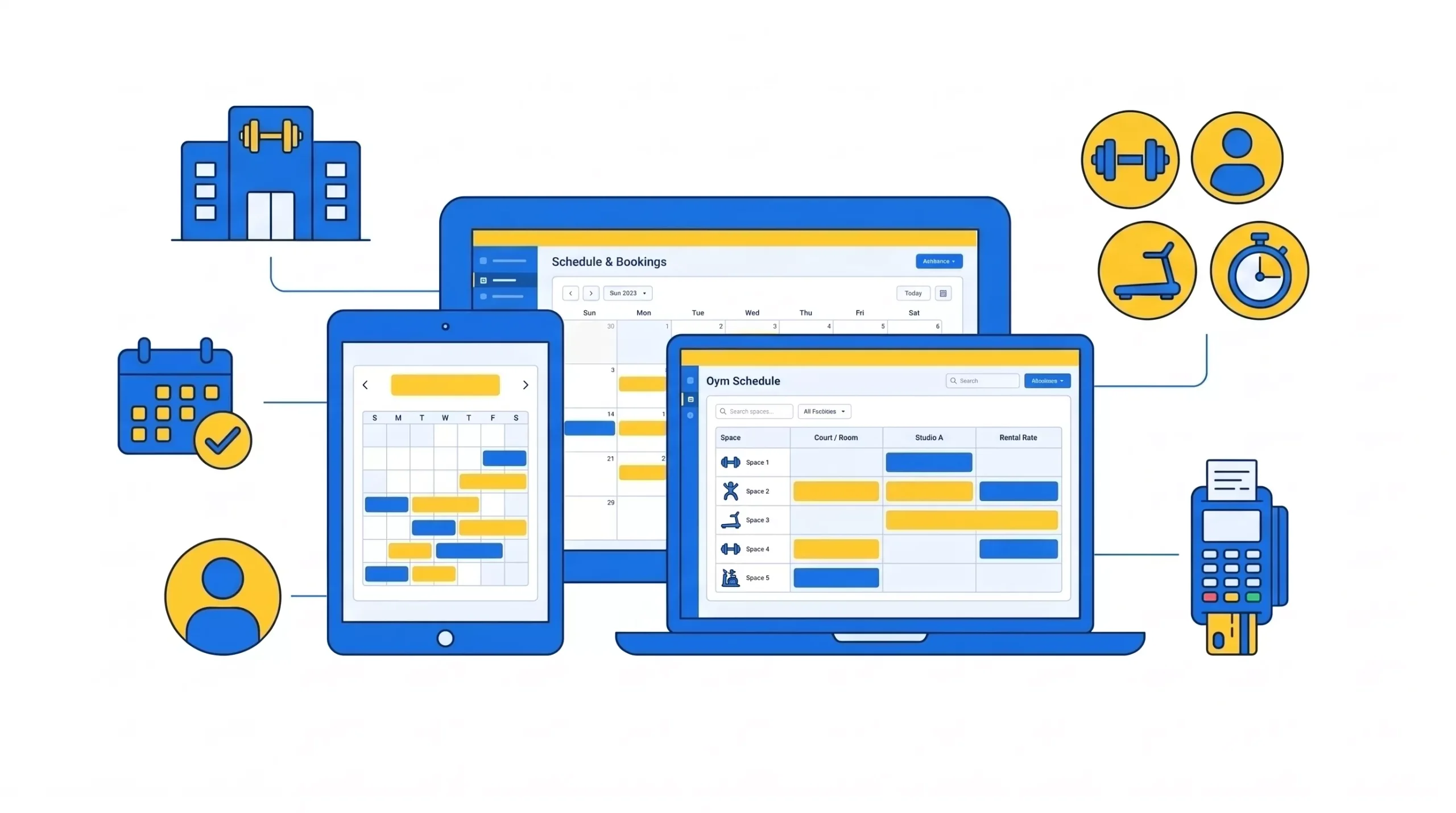
- Manage class schedules and bookings in real time with waitlists and automated reminders to reduce no-shows.
- Track leads, nurture prospects, and convert them into loyal members using built-in CRM and communication tools.
- Offer a branded mobile app where members can book classes, update profiles, and stay connected.
- Integrate POS, payments, and access control, all under one intuitive dashboard.
Whether you’re opening a single location or scaling multiple facilities, GymRoute helps you streamline operations, increase revenue, and strengthen member experience so you can spend less time on admin and more time growing your gym.